Showing posts with label demonstration. Show all posts

Saturday, July 25, 2026

An excellent eighteen-minute 2026 commencement speech by country singer-songwriter Eric Church at the University of North Carolina in Chapel Hill


At the ProRhetoric web site on May 11, 2026 I saw an article titled Your Life, as Six Strings. It has this quotation from country music singer-songwriter Eric Church:


"The difference between a life that sounds like music and a life that sounds like noise ... is whether you're honest enough to hear which string has drifted out of tune, and humble enough to make the adjustment."


There is an 18-minute YouTube video from May 14, 2026 titled Eric Church – 2026 Commencement Speech at UNC Chapel Hill (Full Version).


First he demonstrates how awful an out-of-tune guitar sounds. Then he discusses all six strings on it: Low E, A, D, G, B, and High E. String one, the low E is your foundation. That low E is your faith. String two, the A, is family. String three, the D, is your partner or best friend. String four, the G, is ambition and resilience. String 5, the B, is community. String six, the high E is the one most easily bent by outside pressure, but ignore that.


There is a five-and-a-half-minute lyric YouTube video of his recent song Darkest Hour sung live at the Pinnacle in Nashville on May 24, 2025.


The guitar image came from Wikimedia Commons.


Thursday, June 18, 2026

Polystyrene foam revealed by a demonstration


There is an interesting article by Joe Schwarcz at the McGill Office for Science and Society on June 9, 2026 titled The Case of the Missing Coffee Cup. He describes a demonstration:


“It is a demonstration that never fails to draw oohs and ahhs from students. Pour a small amount of acetone into the bottom of a beaker and drop in a foamed plastic coffee cup. It instantly seems to melt into the liquid and within seconds just vanishes.

Of course, matter cannot just vanish, but it can change from one form into another. Like sugar dissolving in water, the plastic dissolves in the acetone. How can so much plastic dissolve so quickly in so little acetone? Because there is actually very little plastic in that coffee cup.

Yet that little plastic has been expanded by being filled with gas bubbles, much like blowing up a balloon. As the plastic dissolves, the air is released, and we have an apparent magical effect.”

I repeated it using a cubical sample of polystyrene foam insulation placed in a glass custard cup as shown above. When acetone was added, it became just a small puddle. That got even smaller after the acetone evaporated.

A Wikipedia page for Polystyrene has a section on Expanded Polystyrene (EPS) – commonly known as Styrofoam.


Wednesday, February 25, 2026

Giving a speech or doing a demonstration at a 4-H club day


4-H is a national youth development program administered by the Cooperative Extension System under the U. S. Department of Agriculture. The name refers to a focus on personal qualities of Head, Heart, Hands, and Health. 4-H clubs provide youth opportunities related to agriculture, civic engagement, healthy living and STEM.


Back on August 19, 2012 I had blogged about watching A 4-H speech at the Western Idaho Fair. 4-H clubs have speech contests for teenagers (and younger children). State (or provincial) university extension services responsible for 4-H clubs have detailed instructional materials about giving presentations, which are useful for all teenagers. Here are some examples:


California

There is a 58-page pdf article from the University of California revised on January 28, 2021 and titled 4-H Presentation Manual.


Kansas

There is an 11-page pdf article from Kansas State University – Extension Harper County titled Thinking of doing a Talk or Demonstration at 4-H Day? WHY NOT! Here are some helpful hints! Another 6-page pdf article from July 2019 is titled Kansas 4-H Preparing and Using Visual Aids – Fact Sheet 7.0.


Maryland

A 26-page pdf article from February 2021 is titled the Maryland 4-H Public Speaking Guide.


Montana

A 64-page pdf article from the Montana State University Extension in 2016 is titled Montana 4-H Clover Communications.


North Carolina

A 18-page pdf article from May 2019 is titled North Carolina 4-H Presentations.


Orgeon

A 16-page pdf article from Oregon Cooperative Extension in January 2017 is titled 4-H Presentation Guide.


South Dakota

A 22-page pdf article from May 2019 is titled the South Dakota 4-H Public Presentation Guideline.


Texas

A 21-page pdf article from the Texas Agricultural Extension Service on June 1999 is titled Public Speaking…4-H Style. Another 16-page pdfarticle by Iris Kalich from the Texas Agricultural Extension Service is titled 4-H Public Presentation Guide: Method demonstrations & Illustrated Talks. And a 61-page pdf article from Texas A & M Agrilife EXTENSION is titled Explore Public Speaking Project.


Wisconsin

A 16-page pdf article from the University of Wisconsin Extension: 4-H Youth Development on December 2023 is titled A Parent’s Guide to Public Speaking.


Alberta

A 22-page pdf article from 4-H Alberta on September 2005 is titled Speaking Your Way to Success. And another massive 142-page pdf articleby Hugh Phillips from 4-H Alberta on October 2005 is titled 4-H Speak Pack – Communicating Effectively….the 4-H Way.


The 4-H emblem came from Wikimedia Commons.


Wednesday, May 8, 2024

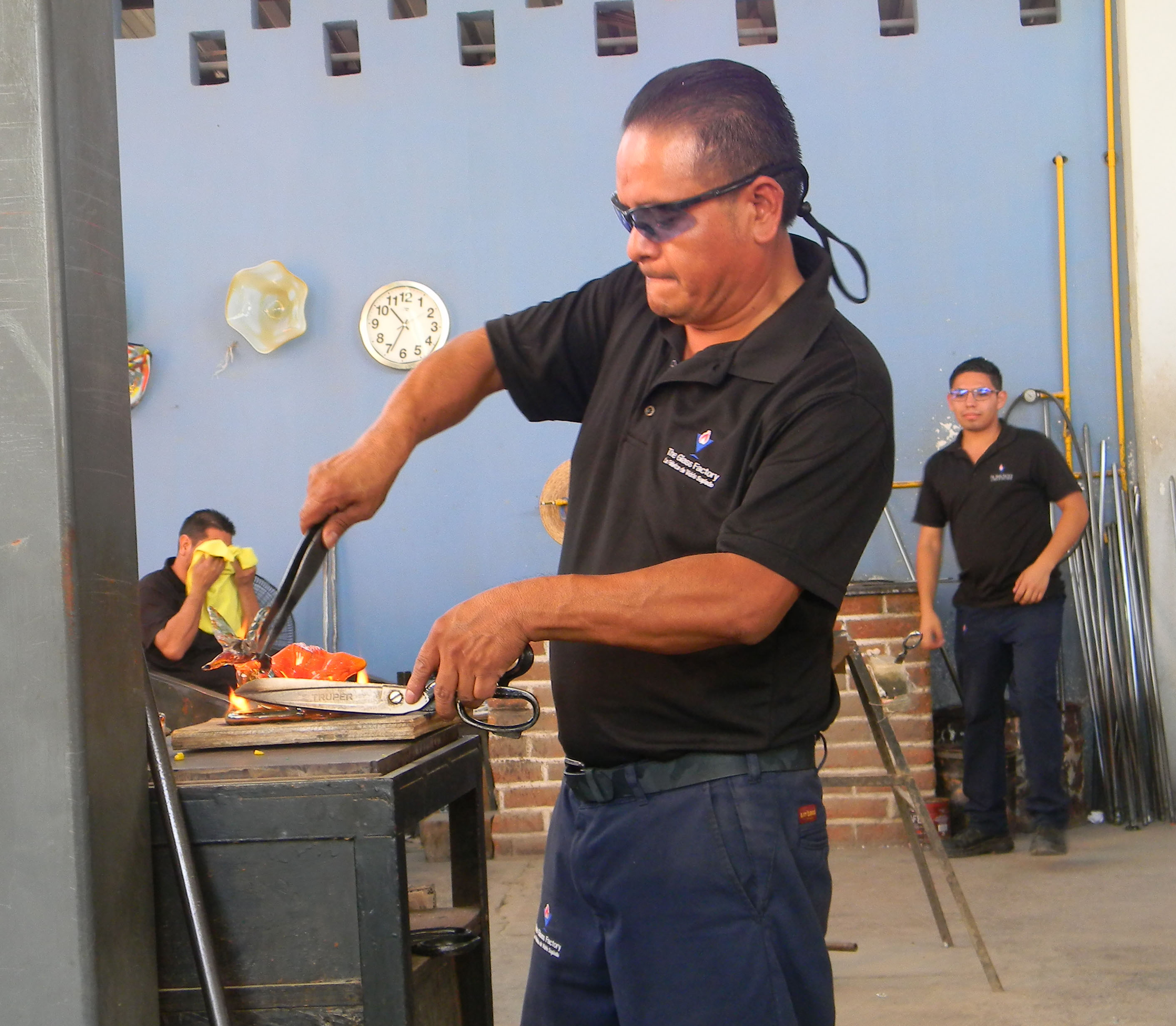
A stunning glassblowing demonstration at the Glass Factory in Cabo San Lucas, Mexico


In late April my wife Elaine and I went for a cruise on the Disney Wonder. On April 25 th I went on a Coastal Highlights tour of Cabo San Lucas.


There was a stunning demonstration at the Glass Factory. A tag team of two artisans produced a hummingbird and flower, like the one shown above.


The sequence of their cooperation is shown above.


They also had other objects like sea turtles.  


Monday, March 21, 2022

What were you doing a decade ago?


Every month I read an online amateur microscopy magazine called Micscape. This month’s issue only has three articles, but also indexed their March 2012 issue. And that issue had my construction article titled Building a double gooseneck white LED illuminator for a stereomicroscope using modular coolant hose.


As shown above, I used 1/4” Loc-Line coolant hose parts to attach an LED headlamp to my StereoZoom7 microscope pod. Loc-Line consists of snap-together ball and socket segments. My collection of photo equipment also includes a Grip-It triple arm clamp made from Loc-Line.


Joby has copied the ball and socket idea for their GorillaPod line of tabletop tripods (as shown above). The three legs on that little tripod can be wrapped around a vertical post or horizontal rail to support my little Nikon Coolpix L110 digital camera for travel photography.   


Friday, December 6, 2019

A striking materials science lab demonstration


On November 26, 2019 I blogged about Avoid falling on your face during a new product demonstration. That post got me thinking about a great metallurgy lab demonstration I had seen almost five decades ago at Carnegie Mellon University. We were shown a Charpy impact test machine and how much the energy to break a V-notched steel specimen varied with temperature. As shown above, the machine has a weighted pendulum which can be released to hit the 1 cm (0.394”) square specimen opposite the notch and measure absorbed energy via rebound height.


At a low temperature there just was a quiet click, the sample broke in two in a brittle fashion, and pieces flew across the room. The pendulum rose to almost the same height as it had started at (less than 10 J). At a high temperature the sample instead bent in a ductile manner. It did not even break completely and it absorbed lots of energy (over 100 J). Examples of intact and broken specimens are shown above.   


Let’s look at an example set of data for a conventional pressure vessel steel plate in the (L-T) orientation (from the ASM Metals Handbook Volume 8, Mechanical Testing, Ninth Edition, 1985 - Figure 3 on page 262). At – 78 C (-108 F), using dry ice and ethanol for cooling, it took just 5 J to break. At ice water temperature, 0 C (32 F), it took 97 J. At room temperature, 20 C (68 F), it took 143 J. At boiling water temperature 100 C (212  F) it took 200 Joules (J). The S-shaped curve has a transition from ductile behavior and high absorbed energy at high temperatures to brittle behavior and low absorbed energy at low temperatures. It is typical for steels.  


Back during World War II this transition was not well understood, and some spectacular brittle failures occurred in welded structures. As shown above, The T2 tanker SS Schenectady broke almost in two on a cold January 1943 day while it just was sitting at a dock in Portland, Oregon. Then in October 1944 a cylindrical tank in Cleveland, Ohio used for storing liquified natural gas broke and the resulting explosion killed 130 people and destroyed a square mile area.  

You can read more about the test in a web page from TWI (The Welding Institute) titled What is Charpy testing? You also can watch a five-minute YouTube video from Materials Science 2000.

Images of the Charpy test (from Laurens vanLieshout), test specimens (from Dumontierc), and the SS Schenectady all came from Wikimedia Commons.

Tuesday, November 26, 2019

Avoid falling on your face during a new product demonstration


On Thursday November 22, 2019 Elon Musk unveiled Tesla’s innovative new electric pickup – the Cybertruck.

A 14-minute video of the demonstration shows clips with the Cybertruck winning a tug of war against a Ford F-150 (9:00), and outrunning a Porsche 911 (9:35). But that’s not what many media reports led with.

Metaphorically he fell right on his face. Elon told his chief designer, Franz von Holzhausen, to throw a metal ball at the driver’s window (7:35). When he did, large circle of glass broke. Then Franz repeated the throw and also broke the passenger window (7:55). Mr. Musk should have followed the Law of Holes

“If you find yourself in a hole, stop digging”

So, an article that day in the Daily Beast by Anna Kaplan is titled Tesla Cybertruck windows shatter during Elon Musk’s durability demo. Another article in Forbes by John Koetsier is titled Tesla demo fail: ‘transparent metal’ armored glass smashed during Cybertruck reveal.

Earlier, at 6:15 in the video, there were comparative ball drop tests showing conventional glass failing at a height of 3 feet, while the Tesla glass survived a height of 10 feet. Why did they take the unnecessary risk of throwing balls at the windows? The drop test setup already was an effective prop.

Assuming the same balls were used, how much more severe of a test was a throw compared with a drop. We can calculate the velocity from a 10 foot drop to be 25.4 feet per second (17.3 mph) based on changing potential energy to kinetic energy (proportional to the velocity squared). I showed how to do that in a November 2, 2019 blog post titled A thought provoking how to book by Randall Munroe. A major league baseball pitcher can throw a 100 mph fastball. Even if Franz only threw at 50 mph, that would still be far worse than the drop test. A drop test is more controllable than a throw. The rush of adrenaline during the demo could make you throw harder than you did during a rehearsal.  


Folks in the news media are not like the rest of the audience, who just want a presentation to succeed. They are looking instead for something startling to gain attention – a Man bites Dog story headline rather than the usual  boring Dog bites Man. Don Henley described that perverse attitude in his 1982 song, Dirty Laundry (see YouTube video):

“I make my living off the evening news

Just give me something, something I can use

People love it when you lose,

They love dirty laundry”

A cartoon man falling was Photoshopped from an 1890 lithograph at the Library of Congress. A man biting a (hot) dog was taken from this image at Wikimedia Commons.

Monday, January 14, 2019

A simple geometry demonstration using crackers


Props used for demonstrations don’t have to be complicated or expensive to be effective. As is shown above, the Pythagorean theorem say that, for a right triangle, the square of the hypotenuse (c ) is equal to the sum of the squares of the other two sides (a and b).


In Bobby Mercer’s new book, Junk Drawer Geometry: 50 awesome activities that don’t cost a thing, he has a clever demonstration of it on page 60 using fifty square cheese crackers. (You can read it on Google Books). As shown above, this example is for a = 3, b = 4, and c = 5.  I used 1” square Kellogg’s Reduced Fat Cheez Its. Of course, you could instead use larger crackers like Saltines.

Junk Drawer Geometry was preceded by two other books by Mr. Mercer with the exact same subtitle on the topics of Physics (2014) and Chemistry (2016).

When you look on YouTube for demonstrations of that theorem you can find another version using square Starburst candies, one with 4.5 mm diameter bearing balls, and several using water in connected flat containers. In The Wizard of Oz the scarecrow incorrectly states the theorem as being for an isosceles triangle. So does Homer Simpson, but he gets corrected immediately.

An image illustrating the theorem was adapted from one at Wikimedia Commons.

Monday, December 24, 2018

Burning a prop dollhouse to demonstrate how a house fire occurs


It’s hard to understand exactly what variables control how a structure fire occurs (fire dynamics). One excellent way is a demonstration using a dollhouse – an inexpensive prop just 49” high, 32’ wide, 19” deep. Watch Allen Fitzpatrick in this three-minute YouTube video titled Salem firefighter demonstrates fire flow paths by burning down doll house.

At Modern Fire Behavior there is a an article from 2015 on a new style dollhouse with plans. There is a 25-page pdf file of Palmer’s Dollhouse with both plans and instructions for lessons.  

There is a 9-minute video titled Deputy Chief PJ Norwood demonstrating flow paths with this training prop, and a 24-minute video titled Doll House fire behavior, Birmingham Fire and Rescue.
 

Wednesday, December 5, 2018

Demonstration Speech: Using an air fryer to make homemade low-fat French fries


Here in Idaho we love potatoes, particularly French fries. The big problem with deep frying is that the potatoes pick up lots of oil. For example, a large serving (5.4 oz) of McDonalds French fries has 470 calories with 198 calories (40%) coming from fat. Assuming the fat is canola oil, that’s about one and a half tablespoons of oil.


If you instead make fries at home with an appliance called an air fryer, then you can cut the amount of oil by a factor of four. The potato sticks are sprayed with oil rather than submerged in it. An air fryer is a countertop forced convection oven which circulates hot air around the basket of food. Inside the oven there is a spiral heating element and a fan (as shown above).

Begin with 12 ounces of Russet Burbank potatoes – one jumbo or two large ones. Either peel them, or scrub the surface with a wet brush to remove dirt. Cut the potatoes into uniform slices, and then cut the slices into your favorite thickness of square sticks.


As shown above, there is a very large range of thicknesses.


Soak the potato sticks in a bowl of cold water for ten minutes to remove surface starch. Then dry them, using a salad spinner (as shown above) if you have one, or paper towels if you don’t.


Place the sticks in the air fryer basket, and spray them with cooking oil spray from an aerosol can. Cook at 380 F until browned and crisp. Depending on the thickness this may take ten to twenty minutes. (See Williams Sonoma recipes for shoestring and seasoned regular fries).  

Back in February 7, 2016 I blogged about a Demonstration Speech: A world of healthy snacks from your microwave. Tortilla chips were included. Don’t try to air fry tortillas – they will float to the top and hit the fan. A demonstration speech is project 3 in the advanced Toastmasters communication manual on Speaking to Inform. Back on December 9, 2012, at Six Minutes, Andrew Dlugan blogged about How to Master the Demonstration speech.

Thursday, April 19, 2018

A cartoon for illustrating a humorous ‘how to’ speech


On April 17, 2018 Doug Savage had a Savage Chickens cartoon titled The Right Way. It goes perfectly with the following story, which I told slightly differently in a blog post on February 22, 2011 titled Return of the Table Topics Bunny:

Back in the early 1980s I had a two-story condo and a curious little black kitten named Finster. On a late-spring weekend day I opened windows for the upstairs master bedroom (front) and bathroom (rear) for cross ventilation. Then I left to run errands for a couple hours. When I returned and opened the front door, I found a mound of toilet paper on the landing. A trail led all the way up the stairs, and into the bathroom. Finster obviously had jumped on the windowsill to look out. As he jumped back down he had brushed the toilet paper roll in the holder on the back wall, and it began to rotate and unroll. Once he got it started he just kept unrolling it and playing. I turned the roll around to feed out underhand rather than overhand. Then I never had that problem again.


Monday, February 5, 2018

How would you line the sloping walls of a large irrigation canal with concrete?


Near where I live there is a large road and intersection construction project in progress. The intersection of Cole Road and Lake Hazel Road is being redone, and Lake Hazel Road will be extended eastward, and cross over the ~45 foot wide, century old, New York Canal via a bridge (which has not been built yet). The New York Canal takes Boise Project water from the Boise River to Lake Lowell in Nampa. It runs for ~40 miles. A few days ago a crew from the Concrete Placing Co. was also finishing lining the canal walls upstream and beneath the bridge. Lining the canal is less than 10% of the road project.

Lining the flat canal bottom is like a bigger version of putting in a sidewalk, driveway, or patio. You likely are familiar with that. The area is dug out, and the edges of the patio are walled with forms to contain the concrete. Then concrete is brought to the site by a mixer transport truck, and delivered via an attached chute (or with wheelbarrows). As is shown above, two guys use a 2x4 board as a screed to strike off the top of the concrete level with the tops of the forms. Then the top can be finished further with a float and edger.  

If you wanted to demonstrate ‘striking off’ to a small audience you might use a 9” square cake pan as the form, a 12” long ruler as the screed, and a granular solid like kitty litter to represent concrete. Pictures or videos work better for a larger audience.


What about the sides of the canal? As shown above (viewed from one bank looking southeast) the sides were divided into panels ~12 feet wide. Half of them were poured using forms, and then the other half were filled in. You can see the welded steel wire reinforcement mesh laid where the new concrete will be placed. A chute from the concrete truck delivers a very stiff mix. Then a Deere tracked excavator uses a pair of ropes to pull a metal screed rod up the wall starting from the canal bottom. That rod is guided by two men using the panels already on both sides to support the ends. You also can see a concrete abutment for the new bridge at the very right.

The image of screeding came from Wikimedia Commons.

Tuesday, June 13, 2017

Wonderful storytelling - a prop demonstration early in the movie Deepwater Horizon


I just borrowed the DVD of Deepwater Horizon from my friendly local public library and watched last year’s big-budget Hollywood biopic disaster (and even IMAX) movie. What impressed me most was the brief prop demonstration shown above in a one-minute YouTube video. At the breakfast table Mike Williams little daughter Sydney jams a brass gizmo into the bottom of a full Coke can, and then squirts honey into the 'straw' on top. (NPR took note of that demo in their movie review).

If you were wondering how people possibly could drill a well into a pressurized gas and oil deposit, they just showed you the answer to your question - it’s a column of ‘mud.’ You didn’t have to go to Wikipedia and look up the page for Drilling fluid, and read the section under Control formation pressures. And then you saw the “well” go out of control and blow out.    

That’s effective storytelling - show rather than just tell. It reminded me of how another complicated story instead was told poorly - David Lynch’s 1984 science fiction epic Dune. It was based on Frank Herbert’s long 1965 novel about a revolt on the desert planet of Arrakis. A 2011 article at The MARY SUE showed both pages from The Glossary that came with Dune... The Movie. As we walked into the theater, they handed it to us. Here are two examples from that glossary:

MELANGE (May-lahnj): the “spice of spices’” the crop for which Arrakis is the unique source. The spice, noted for its geriatric qualities, is of great importance in empowering the Guild Navigators with the ability to “fold space,” thus uniting the Universe under the Emperor.

SANDWORM (known as Shai-Hulud): Sandworm of Arrakis. Sandworms grow to enormous length. Some are 1500 feet long and 125 feet high.; they live to great age, unless drowned in water, which is poisonous to them. 


But If you hadn’t previously read the novel, you still were really lost for the next two hours and seventeen minutes. Too much about that strange world was left untold or unsaid.

Watch a teaser from Deepwater Horizon that cuts between the tabletop demo and the following disaster.