Showing posts with label failure analysis. Show all posts

Wednesday, August 19, 2026

Should we waste over 7.5 million dollars to paint the granite Eisenhower Executive Office Building (EEOB) white?


No, of course not.  The Eisenhower Executive Office Building (EEOB) is part of the White House compound in Washington, D. C. But President Donald J. Trump is upset by its gray color. He wants to create a problem where none had existed. According to an article by Brandon Fisher at Tech Times on August 8, 2026 titled Trump claims White House is above preservation law in Eisenhower paint case:


“The controversy began on November 12, 2025, when President Donald Trump appeared on Fox News and announced his intention to paint the EEOB's exterior bright white, dismissing its dark granite facade with the remark that gray is for funerals.”


Another article by Gary Fields at the Associated Press on August 18, 2026 titled Judge rules paint tests on Eisenhower Building can proceed, advancing Trump’s makeover plans for now added:


“Planners said the paint job would cost at least $7.5 million.”


Yet another article by Robert Freedman at FacilitiesDive on April 14, 2026 titled Trump plan to use ‘magic’ paint will ruin Eisenhower building, restoration experts say detailed potential problems with painting the EEOB:


The summary says that:


“ ‘Mineral silicate paints are not suited for use on granite,’ the specialists said in a Q&A prepared by preservationists seeking to stop the plan. ‘These paints do not chemically bond to granite in the manner necessary to activate their powers to strengthen and protect underlying stone.”  


Their detailed Q&A describes a lack of planning:


“They say mineral silicate paints are inappropriate for granite because granite doesn’t contain calcium carbonate. ‘Mineral silicate paints are designed to chemically bond with stone that contains calcium carbonate, such as limestone, sandstone, or marble.’


Other points they raise:


Making the paint work would require the use of a primer or other acrylic bonding agent, which would undermine the advantage of the paint. ‘The barrier layer of a primer [would block] chemical bonding between paint and stone,’ they said.


The granite would need to be sanded, which would permanently alter the surface. ‘Because granite is relatively smooth and non-absorbent, every surface of the … granite would need to be sanded, scarified, etched, or otherwise abraded,’ they said.


The paint wouldn’t protect the granite from deterioration. ‘At best, it acts only as a surface coating,’ they said. It ‘does not repair internal flaws, prevent cracking, or enhance the inherent durability of granite.’


It wouldn’t stop water penetration. ‘Water infiltration is driven by failings at joints, sealants, flashing, and mortar, and building movement – not by the exposed face of granite blocks,’ they said.


Discoloration would continue to be a problem. ‘Leaching and iron staining can pass through breathable coatings’ like silicate paint, they said. If the granite is painted white, as planned, staining would become even more noticeable, they said.


Removing the paint in the future would be an expensive job, and it wouldn’t be possible without damaging the granite. ‘It would require mechanical or chemical methods that further damage the stone,’ leaving a ‘hazy, filmy’ residue, they said.”       


An image of the EEOB came from Wikimedia Commons.


Monday, July 20, 2026

A Sheldon comic about three levels of insurance


Sometimes a comic strip can add to both your knowledge and vocabulary. I had previously heard of reinsurance but not the next level of retrocession, as is shown above.


Dave Kellett’s Sheldon comic on July 15, 2026 has the following dialogue:


Arthur (the talking duck): You buy insurance.


Arthur:     But then the insurance company buys

                  ‘Re-insurance’ on your insurance.

                  As insurance.


Arthur:     But then that reinsurer needs 

                   their own insurance!

                  So they buy ‘retrocession,’ which is insurance

                  for reinsurers of insurance.


Gramp:    Dear God. It’s insurance all the way down. 

                  [An infinite regress.]


Arthur:     And the secret? NOT A SINGLE ONE OF THOSE 

                  POLICIES PAYS OUT WHEN NEEDED.


The Wikipedia page on Reinsurance says it is:


“…the transfer of liability from the insurance company, which issued the insurance contract, to the reinsurance company. The reinsurance company assumes some of an insurance company's liability in exchange for a payment or a portion of the insurance contract costs.


Munich Reinsurance, known as Munich Re is one example, and Swiss Re is another. Munich Re used to post an interesting quarterly magazine called Schadenspiegel (about losses and loss prevention) on their web site. Later they restricted it just to their customers. You can find their 2007 Special feature issue – Risk factor of earth as a 58-page pdf.


Lloyd’s of London is another somewhat different reinsurer. The Wikipedia page about them says:


Lloyd's of London, generally known simply as Lloyd's, is an insurance and reinsurance market located in London, England. Unlike most of its competitors in the industry, it is not an insurance company; rather, Lloyd's is a corporate body governed by the Lloyd's Act 1871 and subsequent acts of Parliament. It operates as a partially-mutualised marketplace within which multiple financial backers, grouped in syndicates, come together to pool and spread risk. These underwriters or ‘members,’ include both corporations and private individuals, the latter being traditionally known as ‘Names’.”


There is an article by Ramon Berenguer at Reinsurance News on August 20, 2025 titled How does retrocession in reinsurance work? He says that:


“Retrocession is a reinsurance transaction where a reinsurer transfers risks of an insurance company it has reinsured to another reinsurer. The reinsurance company that takes on another reinsurer’s risk is called the retrocessionaire.” 


How did I learn about Munich Reinsurance? Back in 1964 Munich Re published two books (of text and plates [images]) with failure analysis case histories by E. J. Pohl titled The Face of Metallic Fractures. They were subtitled Results of Investigations on Failed Engineering Components Carried Out by the Engineering Insurance Department of the Allianz Versicherungs-Aktiengesellschaft.


In 1990 I was working in Columbus, Ohio doing consulting which included lots of failure analysis. I bought the 1988 Fatigue Design Handbook from the Society of Automotive Engineers (SAE). On pages 297 to 330 there was Chapter 11 on Failure Analysis by David Broek which referred to E. J. Pohl’s book. Munich Re had a U.S. office in downtown Columbus, so I visited them and asked the manager whether I could buy a copy of that book. He said no, it was long out of print. But then he asked around that company, found a spare copy at another office, and mailed it to me as a Christmas present!


Tuesday, February 17, 2026

Use a glitch report to keep mistakes or failures from recurring


I have been skimming through a useful 2026 book by Jessica Weiss titled Happiness Works: The science of thriving at work. There is a preview at Google Books. Chapter 5, starting on page 85, is titled Trust and Happiness and subtitled An unbeatable team formula. An article by Julia Korn in Forbes on November 12, 2025 titled A Practical Guide to Being Happier At Work (From a Workplace Happiness Expert) discusses it as follows:


“Run a regular ‘Glitch Report’ with your team


Borrowed from the Four Seasons hotel, this simple ritual turns everyday frustrations into learning moments. A ‘glitch’ is any situation that didn’t go as planned – a missed deadline, a miscommunication or even a small annoyance. The goal isn’t to assign blame or complain, but to find solutions together.


Here’s how it works: each team member shares what went wrong during the previous day, week, or month – depending on cadence – and the steps that have been taken to fix it. The result? Everyone’s aligned, informed, and empowered to help address the glitch further.


Weiss says this practice builds:

   Transparency

   A focus on learning and improvement

   Inclusive participation

   Collaboration, particularly when problems surface

   Timely and constructive feedback.


In short, the glitch report creates a culture of psychological safety, where team members can speak up, take risks, and own mistakes without fear. This counts: when people feel psychologically safe, they’re far more resilient to burnout, even when their work environment isn’t perfect.


Try this practice with your team to see how problems turn into solutions.”  


The first note in the book for this chapter references a post by John Caddell in the FutureLab blog on January 10, 2015 titled Four Season Hotels Review a Daily Glitch Report:


“Next up [in our daily review] is a review of the previous day’s mistakes in something we call the Glitch Report. Every department in the hotel is represented at the morning meeting, and each has a printout detailing what has gone wrong and what steps may already have been taken to correct course. The Glitch Report ensures that every hotel department knows what happened and which guest it affected.

We might have missed a guest with something as simple as turndown service, and everybody listens to the department head responsible as he or she articulates what went wrong. That person will go to the root cause of the problem and tell everyone what will be done to fix it in that guest’s eyes. Whatever the issue, making it right starts with a sincere apology. It can also mean trying to do something else for them later on in their visit. It can mean an amenity such as flowers or fresh fruit skewers or a bottle of wine. It could mean an appropriate adjustment or consideration on their bill. For each guest, we strive to find the right approach in the apology.”


The cartoon was modified from this one at OpenClipArt.


Thursday, January 29, 2026

An xkcd cartoon about hazardous male-to-male extension cords


The xkcd comic for January 23, 2026 is titled Double-Pronged Extension Cord. My colorized version is shown above. It was discussed at Explain xkcd. A Wikipedia article titled Gender of connectors and fasteners has a section on Safety that explains how this is a tragedy waiting to happen:


A double-ended male connector for utility-supplied (mains) electrical power is extremely dangerous, and sometimes is called a ‘suicide cable’ or ‘widowmaker cord’. Some hardware shops explicitly refuse to make or sell them when asked by customers who have mistakenly hung a string of Christmas lights backwards and wish to connect the socket end to a wall socket, or who intend to connect a generator or inverter to their home's electrical circuit in the event of a utility power outage. The exposed prongs on the live end of the cable pose serious electrical shock and fire hazards, and when improperly used in a generator setup may cause the equipment to burn out when utility power is restored. It can also backfeed power into the grid, potentially damaging utility equipment or even electrocuting linemen attempting to restore power.


There is an article at the Consumer Product Safety Commission (CPSC) web site on September 15, 2022 titled CPSC warns consumers to immediately stop using male-to-male extension cords sold on Amazon.com due to electrocution, fire, and carbon monoxide poisoning hazards. A follow-up article at Consumer Reports by Tobie Stanger on September 16, 2022 is titled Don’t Use Male-to-Male Extension Cords Sold on Amazon – or Elsewhere.


For photography male-to-male extension cords sometimes were used to synchronize a pair of electronic flashes for cameras, like the suicide cable shown above. Of course, this was potentially dangerous because someone else might instead plug one end into an AC wall socket and destroy your flash. See an article at STROBIST in April 2006 titled Lighting 101: Build a Pro Synch Cord, Pt. 1.


The image of a suicide cable came from Wikimedia Commons. 


Sunday, March 23, 2025

Almost all Tesla Cybertrucks were recalled because trim rails might fall off


An article by Matt Ott at AP News on March 20, 2025 is titled In latest blow to Tesla, regulators recall nearly all Cybertrucks. Another article by Bryon Hurd at TheDrive on March 20, 2025 is titled Tesla recalls just about every Cybertruck as decorative steel falls off. An arrow in the above image points to the trim. Bryon said:


“Per the recall notice, the Cybertruck’s stainless steel cant rail trim (Easy to remember; it’s the part that can’t stay attached) may separate from the truck at speed, posing a hazard to other motorists.”


The NHTSA Part 573 Safety Recall Report on March 18, 2025 says 46,000 vehicles were affected and that:


“The Cybertruck is equipped with a cosmetic applique along the exterior of the vehicle, known as the cant rail, which is an assembly comprised of an electrocoated steel stamping joined to a stainless steel panel with structural adhesive. The cant rail assembly is affixed to the vehicle with fasteners. On affected vehicles, the cant rail stainless steel panel may delaminate at the adhesive joint, which may cause the panel to separate from the vehicle….


The remedy component uses a different structural adhesive not prone to environmental embrittlement to join the assembly, which is reinforced with a stud welded to the stainless panel with a nut clamping the steel panel to the vehicle structure.”


As shown above, there are three possible failure paths – either in the adhesive or along one of the two interfaces. The remedy will depend on the exact path, which apparently was in the adhesive.


This sure isn’t rocket science!


Tuesday, October 1, 2024

Be sure to follow Hoot's Law in a crisis


I have been enjoying reading a 2023 book (I got from the Meridian Public Library) by Mike Massimino titled Moon Shot: A NASA astronaut’s guide to achieving the impossible. Chapter 5 is titled You Can Always Make It Worse, and it tells all about Hoot’s Law for dealing with a crisis. There is a brief discussion by Stephanie Vozza at Fast Company on December 7, 2023 in an article titled An astronaut shares his 30-second trick for boosting productivity.


Mike describes having trained for a space walk in the Neutral Buoyancy Laboratory (NBL) which is a 200-foot long by 100-foot wide by 40-foot-deep pool. He got his safety tether hopelessly tangled up – between his legs, around his helmet, and around his tools. Finally, he asked Jim Newman, his spacewalk partner for help. Beginning on page 82 of the book (or here at Google Books), Mike says:


“In the battle of Mike vs. Tether, the tether had definitely won, and I spent the rest of the exercise kicking myself. Once we were out of the water, Jim took me aside and asked how my snarl got so bad. It was one of the worst he had ever seen. I told him it started out not so bad, but then I rushed, didn’t ask for help, and made it steadily worse and worse until I was totally trapped. Jim nodded and said, ‘Mike, you need to remember Hoot’s Law.’


‘What’s Hoot’s Law?’ I asked.


‘It’s something ‘Hoot’ Gibson used to say during his astronaut days: No matter how bad things may seem, you can always make it worse.


‘Wow,’ I said, ‘Hoot Gibson was a wise astronaut.’


‘He was,’ Jim said. ‘There’s something else Hoot used to say that you might find helpful, too. ‘Nothing is often a good thing to do and always a good thing to say.’  


Hoot’s law was sound advice. When my first snarl occurred, it wasn’t that big of a problem. But with my rushing and panicking, I made it worse. It would have been better to slow down, take a minute, and appraise the situation before acting. In other words, it would have been better to do nothing until I figured out what had happened before I rushed to action. I could also have asked Jim or the control team to help me see where my safety tether was caught, since it was hard for me to do so myself. Hoot’s Law was one of the most important lessons I ever learned.


Robert ‘Hoot’ Gibson was a naval aviator and test pilot who’d been selected as an astronaut in 1978. His flying skills and leadership qualities were legendary. Everyone liked him. During my first selection board interview in 1994, he was still on staff, serving as chief of the Astronaut Office. During my interview, he sat not far from me, smiling the entire time. I’ll never forget that. At a time when I was nervous, he gave me this wonderful smile that seemed to say, ‘It’s okay, buddy. You’re doing great.’ It was a huge comfort to me at a very stressful time.


Hoot left NASA in November 1996, soon after my classmates and I showed up, but his mantras and advice continued to be passed on from generation to generation. One of the men who made sure those lessons got passed along was Charlie Bolden. In his long and legendary career, Charlie Bolden had served as a naval aviator, a test pilot, a NASA astronaut, a United States Marine Corps general, and the head of NASA from 2009 to 2017. Even with the talent to amass that kind of experience, Charlie Bolden had suffered his own embarrassing lesson in learning Hoot’s Law. For his first spaceflight in January 1986, Charlie was assigned to be the pilot of space shuttle Columbia. Hoot was his commander. During one of their early training runs, they were doing a shuttle launch simulation – a sim – with the rest of their crew. Charlie, being the rookie, wanted to show everyone how competent he was, just like I’d done with my tether in the pool. The second they lifted off, an alarm sounded due to an electrical failure. Charlie got out his checklist an determined they had an essential electrical bus failure that had taken down one of the shuttle’s three main engines. He told Hoot what the problem was and that he would take care of it. Charlie then ran the necessary procedure, which called for flipping a switch to shut down the failed part of the electrical system to take the bad electrical bus offline. So he reached over and flipped a switch – the wrong switch, taking down the wrong electrical bus.   


‘Suddenly.’ Charlie described to me, ‘it got really quiet in the simulator.’ They had already lost one engine from the first electrical failure. Charlie had now lost a second engine by taking an essential electrical source offline, which meant they were trying to get to space on one engine. Which is not possible. As the simulated gravity slowly overtook their simulated shuttle, they fell back down to the simulated Earth and crashed in the simulated ocean, dying their fiery, simulated deaths. Charlie just sat there as embarrassed as he could be, and that’s when Hoot Gibson looked over at him, put his hand on his left shoulder, and said, ‘Charles, have I ever taught you Hoot’s Law?’


Mike concludes the chapter:


“So, when you’re faced with what seems like a hopeless situation that can’t get any worse, remember: YOU can make it worse. Don’t let that happen, instead I suggest the following:


Remember Hoot’s Law. Think of how things could be worse if you make another mistake, and don’t create a second problem while hastily trying to solve the first problem.


Remember Joe LoPiccolo. Go slow and resist the temptation to act too quickly.


For critical corrective actions, if possible, get a second person to look over your shoulder to mke sure your action won’t lead to a worse situation.”


Charlie Bolden’s NASA oral history from 2004 has a slightly different statement of Hoot’s Law:

 “No matter how bad things get, you can always make them worse.”  


Right now there isn’t a Wikipedia page for Hoot’s Law, or a discussion of it on the page for Robert L. Gibson.


On December 20, 2019 I blogged about The joy of safety interlocks. In that post I referred to an article by John A. Palmer and David A. Danaher in EC&M on November 1, 2004 titled A series of preventable events leads to a power plant explosion. They describe how it began with a toilet line backup spewing sewage on control equipment. That led to hasty and botched repairs which defeated interlocks and allowed an explosive mixture of air and natural gas to develop – and over a half billion dollars of physical damage and lost revenue.   


The cartoon of an owl came from Openclipart.


Sunday, September 1, 2024

Wicked Problems and Engineering a Better World


I have been enjoying reading a 2024 book by Guru Madhavan titled Wicked Problems: How to Engineer a Better World. It also has a preview at Google Books. For two decades I conducted failure analysis projects to solve what he describes as hard problems.


In the book he discusses four types of problems: hard, soft, messy, and wicked. Beginning on page 7 he says:


“Call the first type ‘hard problems.’ They are bounded and boundable, and scientific principles, market pressures, and sponsor requirements neatly specify them. The outcomes are directed – even dictated- by customers, consumers, and clients….Such problems can be mathematically manipulated, chemically configured, and materially improved. Ultimately, they can be ‘optimized’ by applying available knowledge and experience with the idea that the best possible outcome exists and is achievable.


The second class, call it ‘soft problems,’ is in the area of human behavior, which is complicated by political and psychological factors. Because their endpoints are unclear, and thorny constraints complicate their design, soft problems cannot be solved like hard problems; they can only be resolved. There are no easy fixes to a problem like traffic congestion….Since soft problems fuse technology, psychology, and sociology, resolving them yields an outcome that’s not the best but only good enough. As Ackoff characterized it, the results are based not on optimizing but on ‘satisficing,’ an approach that satisfies and suffices.


The third class, ‘messy problems,’ emerges from differences and divisions created by our value sets, belief systems, ideologies, and convictions. A disease outbreak may involve hard problems with solutions such as barcode-tracked supplies or antibiotic deliveries. The outbreak’s soft problems might require resolutions like mapping infectious disease spread or retooling the indoor environment to prevent the propagation of infection. Neither resolution is exact, but both are good enough. By contrast, a messy problem can involve a pathogen gaining antibiotic resistance or intersecting with delicate religious rituals, as we’ll see with Ebola…..Messy problems can be reframed out of existence not by optimizing or satisficing but by ‘idealizing.’ In Ackoff’s words, this entails getting the matter ‘closer to an ultimately desired state, one in which the problem cannot or does not arise.’


If they were works of art, hard problems would be photographs, offering clarity and directness. Soft problems are like blurry brushstrokes of impressionism, and messy problems are spilled and splattered abstractions. A wicked problem emerges when hard, soft, and messy problems collide. Think of them as a cubist collage where the truth is simultaneously sharp, shaky, and squiggly. All three are required for wickedness. Hardness is nestled in soft problems, and hardness and softness reside within messy problems. By extension, a solution can be within a resolution, and a dissolution might contain resolutions and solutions.”     


Chapter three of the book discusses the failure of a fifty-foot tall, ninety-foot diameter steel molasses tank that occurred on January 15, 1919 – when it had been filled for the first time. It killed 21 and injured 150. Wikipedia has an article about it titled the Great Molasses Flood. On page 114 Dr. Madhavan says:


“Based on the technical manuals of the time, the Purity tank’s safety factor should have been at least four times the strength chosen. The tank’s thin walls, selected as a cost-savings measure, proliferated a rapid fracture. Since the 1850s, when steel production ramped up, low-temperature brittleness has been a problem. Microscopic analyses from the Boston Navy Yard showed that the tank’s fractures were herringbone, a zigzag damage pattern. The breakdown of riveted constructions remained common well into the mid-20th century; during the winters of 1943 and 1944, World War II Liberty ships literally broke in half, embrittled.”  


But he is wrong about the Liberty ships, which were welded rather than riveted. The textbook example for failure was the tanker SS Schenectady, which broke in two on January 16, 1943 while she was moored at a dock in Portland, Oregon. 


Another tanker, the SS Pendleton, broke in two during a gale south of Cape Cod on February 18, 1952. 32 sailors on one half were heroically rescued by four men in a 36-foot Coast Guard motor lifeboat from Chatham, as depicted in the 2016 film, The Finest Hours and above in a sign at the Chatham station. You can watch a nineteen-minute YouTube video titled The Daring Sea Rescue That Shocked the World.


There was another horrible failure involving a tank storing liquified natural gas in Ohio. The Cleveland East Ohio Gas Explosion on October 20, 1944 killed 131 people.


A ten-pointed image from Openclipart represents a wicked problem.  


Saturday, July 6, 2024

The magic of reading books – stories told by librarians and booksellers


In the new books shelves at my friendly, local public library I just found the 2024 book by James Patterson and Matt Eversmann titled The Secret Lives of Booksellers and Librarians: True Stories of the Magic of Reading. I have been enjoying that collection of about sixty brief stories. Here are two examples.


Lorrie Roussin is a librarian at Luna Middle School, in San Antonio, Texas. There is an story by her starting on page 11 (in the preview at Google Books). Pages 15 and 16 say:


“ ‘Ms. Roussin! Ms. Roussin, Ms. Roussin, Come here!’


The student storms into the library, calling for me at the top of her lungs. ‘Ms. Roussin, you’ve got to come here!’


What did I do? This is the same girl who came to me a few days ago, reluctantly looking for a book to read for class. I’d handed her All American Boys, by Jason Reynolds and Brendan Kiely.


She stands in front of me, still worked up. ‘Ms. Roussin, this is the first book I’ve read that had me in it.’ It just blew her away.


The same thing happens with another student. Over the Thanksgiving break, he takes home a stack of books, including All American Boys.


‘Ms. Roussin,’ he declares when he returns, ‘I read this book. Then my brother read this book. And then my mother read this book. And then my grandmother read this book. And now she says she’s going to by me all of this author’s books.’


There’s no better feeling than knowing I helped make this connection, not only for my student, but for his entire family.”


The Wikipedia article about Jason Reynolds says of All American Boys that:


“The book depicts a black teenager assaulted in a convenience store by a white police officer who wrongly suspects him of stealing. The book is written in two voices, with Reynolds writing from the point of view of the teenaged victim, Rashad Butler, in a hospital bed, while Kiely wrote the character Quinn Collins, a white teenager and family friend of the police officer, who witnessed the violent attack.”


Susan Kehoe is the owner of Browseabout Books in Rehoboth Beach, Delaware. Her story starting on page 29 says:


“ ‘It’s great that you love books and want to work at a bookstore,’ I tell the potential employee sitting across from me. ‘But do you also like to clean toilets?’


It’s a valid question.


People always say they’d love to open a bookstore or work in one because they have this romantic notion of walking around all day with their nose in a book or sitting in a big, overstuffed chair drinking tea and talking about Dickens.


That’s not the reality. Part of the job is dealing with unexpected problems like clogged toilets and other little disasters that happen every day at the store – like sweeping sand.


A lot of sand.


Browseabout Books is located a block and a half from the ocean, in the middle of a mile-long boardwalk. In the summer months, we have a constant influx of sand. People coming up from the beach wearing bathing suits and bikinis are covered with it – and, when making purchases, they pull moist money from strange places.


Our 13,000 square-foot store attracts a mix of locals and tourists. In addition to books and menu items from a small café, we sell a little bit of everything – toys, games, even stationery. Working with an artist, we’ve created a line of jigsaw puzzles and other higher-end, gift-quality items that people want to take home with them. We’re big on changing up merchandise because we want everyone who comes into the store to have a unique experience.


But books are the heart of what we do, and books offer a way to escape reality and immerse the reader in another world. There are millions and millions of books out there, and people keep returning to the store because they trust our recommendations.


Especially those for kids. Everyone says kids don’t read anymore, which I don’t find to be true. We have so many enthusiastic kids leaving the store with stacks of books. They’re staring at computer screens all day long, so having a physical book in their hands, I think, allows them an escape.


I love it when a parent comes back and says, ‘My kid wasn’t a reader, but you guys suggested a book, and I gave it to him, and he hasn’t stopped reading. It’s like this whole new world has opened up for him.’


Knowing we can literally change someone’s life is pretty cool.


And it never gets old.


….We’re well known in beach-reading circles. Elin Hilderbrand, the bestselling author and ‘queen of beach reads,’ is a store favorite. I felt like we made it when she gave us a little name drop in her book Golden Girl – her main character, an author, mentions starting her book tour at Browseabout Books.”


Back in high school I found a life-changing little book by George Polya titled How to Solve It: a system of thinking which can help you solve any problem. It gave me a whole new intellectual toolbox – which I used in my careers in applied research and engineering consulting.


The toolbox cartoon came from Openclipart.   


Wednesday, April 3, 2024

Baseless conspiracy theories about the collapse of the Francis Scott Key Bridge in Baltimore


On March 26, 2024, at 01:27 EDT, the Francis Scott Key Bridge in Baltimore collapsed after one of its support pillars was struck by the container ship M.V. Dali. Eight construction workers were filling potholes on the bridge. Two were rescued, and the other six died.There is an AP article by Ben Finley and James Pollard on March 30, 2024 titled What we know about the Baltimore bridge collapse.


Almost immediately there were claims it was a terrorist act. On the Coast-to-Coast-AM radio show, John M. Curtis (who writes as Online Columnist) claimed ISIS-K was responsible. An article by Tess Owen at The Guardian on March 27, 2024 is titled Online conspiracy circles galvanize to proclaim Baltimore bridge collapse a ‘black swan event.’ But when you look up the Wikipedia page on Black swan theory, you will find that a Black Swan event:


“First, it is an outlier, as it lies outside of the realm of regular expectations, because nothing in the past can convincingly point to its possibility. Second, it carries an extreme ‘impact.’ Third, in spite of its outlier status, human nature makes us concoct explanations for its occurrence after the fact, making it explainable and predictable.”


The Key Bridge collapse was NOT the first event of its type, so it is certainly NOT a Black Swan. Back on May 9, 1980 the Sunshine Skyway Bridge over Lower Tampa Bay collapsed after being hit by a ship. 35 people died. On April 17, 2023 I blogged about A great video course on Epic Engineering Failures and the Lessons They Teach. In the course that Tampa event is discussed under #6, Vehicle Collisions.   


There are other articles lamenting all of these online conspiracies. One by Mary Whitfill Roeloffs at Forbes on March 27, 2024 is titled Baltimore bridge collapse sparks wild conspiracies – even though officials continue to dispel them. A second by David Gilbert at Wired on March 27, 2024 is titled Online conspiracies about the Baltimore bridge collapse are out of control. And a third by A.W. Ohlheiser at Vox on March 28, 2024 is titled The slow death of Twitter is measured in disasters like the Baltimore bridge collapse. There also is a ten-minute YouTube video by Donie O’Sullivan at CNN titled ‘Ridiculous’: Reporter reacts to conspiracy theories about Baltimore bridge collapse.


A later article by Ramon Padilla, Trevor Hughes, and Shawn J. Sullivan at USA Today on March 29, 2024 is titled How Francis Scott Key Bridge was lost: A minute-by-minute visual analysis of the collapse. It looks more like a complicated accident.


Before and after Images of the bridge are from Wikimedia Commons.


Wednesday, March 13, 2024

Hangar collapse at the Jackson Jet Center beside the Boise Airport


On January 31, 2024 workers from Big D Builders were erecting the steel frame for a new hangar at the Jackson Jet Center, which is located beside the Boise Airport at 4049 West Wright Street. The hangar was to be 45 feet tall and cover an area of 39,000 square feet. It was about 310 feet wide by 126 feet deep. But around 5:00 PM it collapsed with the trusses changing to the shape of a capital letter M (as shown above in my image), killing three people and injuring another nine.


Some details are discussed in an article by Sally Krutzig in the Idaho Statesman on February 20, 2024 titled Rescue operations at Boise building collapse included 3 people stuck in aerial lifts:


“In his review, Boise Fire Department Training and Safety Capt. Steve Madigan wrote that ‘it appeared that the structure somehow failed at the ridge line and caused all the columns to pull inward.’ Initial reports indicated 16 people were at the scene when the building went down, and police and fire crews helped wounded victims who were able to walk leave the area, according to Madigan. The building’s columns ‘were leaning at 45 degrees (approx.) and the bolts securing them to the ground had either sheared off or tore the bottom flange of the steel as they fell,’ Madigan wrote.”


Another article by Alex Brizee at the Idaho Statesman on March 6, 2024 is titled ‘Did not look right’: Workers flagged concerns before deadly Boise hangar collapse. It includes an overhead drone shot of the collapsed hangar, which has fallen to one side. That suggests a directional load, perhaps due to wind gusts. The article began by stating:


“Several employees who worked at the site of a deadly building collapse on Boise Airport grounds told police they had noticed bending beams, snapped cables and overall structural issues, according to Boise Police Department investigative reports obtained by the Idaho Statesman. Some of these workers informed the site’s supervisor of the concerns the day before the hangar crumbled on Jan. 31, killing three people and injuring nine others. Interviews with employees of Boise-based Inland Crane, which provided equipment and operators for the construction of the Jackson Jet Center hangar, were documented in Boise Police Department reports that were released to the Statesman through a public records request.”


Still another article by Angela Palermo at the Idaho Statesman on February 2, 2024 titled Was it wind? How a bridge’s failure may shed light on fatal Boise Airport hangar collapse includes two images of the framing before the collapse.


OSHA is investigating the collapse and will issue a report within six months. How an investigation proceeds is discussed in yet another article by Kevin Goudarzi at Structure on

March 2023 titled The forensic engineering process for structural failures. On April 17, 2023 I blogged about A great video course on Epic Engineering Failures and the Lessons They Teach. In that post I discussed the Hyatt Regency walkway collapse, where a design detail change doubled the applied load – eliminating the intended factor of safety.   


UPDATE

There is an article by NIck Rosenberger at the Idaho Statesman on April 18, 2024 titled Wreckage of the Boise Airport hangar is still standing. Why, and what's coming.  


Friday, February 9, 2024

Alaska Airlines Boeing 737 Max 9 airliner door plug incident


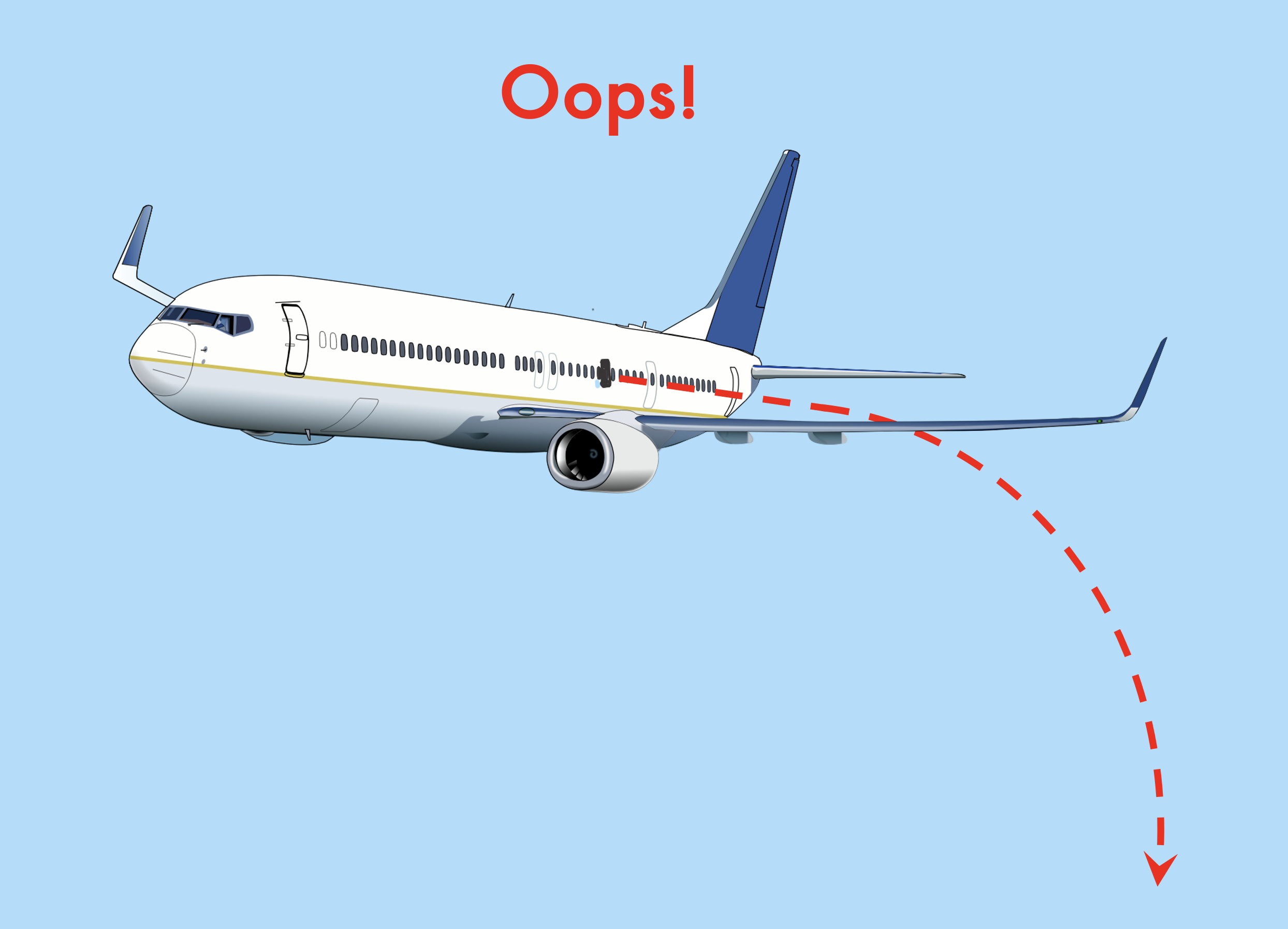
On January 5, 2024 Alaska Airlines Flight 1282 took off from Portland International Airport at 5:07 PM. Six minutes later, at an altitude of 16,300 feet a 2x4’ door plug detached from the fuselage (as shown above), causing a rapid loss of cabin pressure. Luckily the crew was able to return to the airport and there were no severe injuries or fatalities. A door plug is a panel for covering an unused emergency exit. An article by George Petras et al. at USA Today on January 8, 2024 titled A Boeing 737 Max 9 lost a panel midair, terrifying passengers. Here’s how it happened describes the incident. Another article by Kristian Foden-Vencil at OPB on January 8, 2024 titled Portland teacher recounts finding Boeing door plug in his yard told about an astonished science teacher, Bob Sauer. A third article by Sean Broderick at Aviation Week Network on January 9, 2024 is titled NTSB Eyeing Door Plug Bolts in Alaska 737-9 Accident Probe.


A fourth article by David Shepardson at Reuters on February 6, 2024 titled Bolts appeared to be missing from door plug that flew off Boeing MAX 9 jet – agency discussed preliminary results from NTSB. The plug had been removed to repair some rivets, and not properly reinstalled. There should have been four bolts fitted with castle nuts (as shown above) and locked in place by cotter pins. If those bolts had been installed correctly, then they never should have loosened and come off. A close-up view of a properly installed castle nut can be found here on the last page from an October 2016 NHTSA Recall for an Autocar Industries truck.


On May 6, 2018 I blogged about how Driverless cars don’t need steering wheels – but the rest of us sure do. In that post I discussed another incident (which I’d helped investigate) involving a motorglider crash due to a locknut not being properly tightened.


On January 12, 2024 in his Writing Boots blog Dave Murray linked to a humorous video by Clarke and Dawe describing another incident – where The Front Fell Off.  


I adapted an image of a Boeing 737 from Openclipart. An image of a castle nut came from Wikimedia Commons.


Tuesday, September 5, 2023

Bad storytelling about product recalls


I recently read about a product recall involving steering in some recent Nissan Sentra compact cars. One article at AP on August 19, 2023 is titled Nissan recalling more than 236,000 cars to fix a problem that can cause loss of steering control. It contains the following description:


“Nissan is recalling more than 236,000 small cars in the U.S. because the tire rods in front suspension can bend and break, possibly causing drivers to lose steering control. The recall covers certain Sentra compact cars from the 2020 through 2022 model years. Tie rods help vehicles move the wheels for steering. Nissan says in documents posted Saturday by the National Highway Traffic Safety Administration that if tie rods become bent, they can break and affect the steering, increasing the risk of a crash.”


As is shown above via a schematic (revised from one at Wikimedia Commons), inner tie rods connect between the steering wheel and vehicle front wheels. They don’t just ‘help’ move them. Another article by Keith Barry at Consumer Reports on August 21, 2023 titled Nissan Sentra sedans recalled again to fix steering issues also talks about tie rods just helping:


“Nissan is recalling over 236,000 Sentra sedans from the 2020 through 2022 model years because of a faulty part that could make it more difficult to steer. In serious cases, the driver may lose control of the vehicle…


The problem has to do with the vehicle’s tie rod, which is a part that helps connect a vehicle’s steering system to its drive wheels. On the recalled Sentras, the tie rod can bend too easily after experiencing a high-impact force such as hitting a curb, which can cause vibration and an off-center steering wheel. If the tie rod breaks, the driver could lose some steering control.”


At the United States Consumer Product Safety Commission on July 6, 2023 there is a recall notice titled Husqvarna Recalls Residential 300 Series Snow Blowers Due to Injury Hazard. These snow blowers are self-propelled and the description for Incidents/Injuries says:


“The firm has received 22 reports where the auger pulley bolt loosened and the drive unexpectedly became engaged. No injuries have been reported.”


And it also says:


“Hazard: The recalled 300 series snow blowers can unexpectedly go into drive mode and collide with a consumer, posing an injury hazard.”


I assembled the cartoon shown above from Openclipart images of a snow blower and a running man, showing him being chased through the snow. If he fell, then it could turn into a version of the infamous wood chipper scene from Fargo.