Showing posts with label impressions. Show all posts

Saturday, November 20, 2021

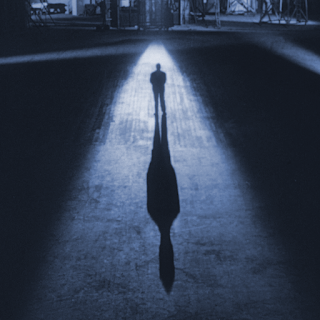
An informal mentor who cast a long shadow


Some people who are not our formal mentors nevertheless cast a long shadow over us. For me, one was Dr. Richard V. Lynch, Jr. I met him in June of 1972, when he did my enlistment flight physical for the Air Force Reserve (to become a medic in an air evac squadron). He listened to my heart with a stethoscope and frowned. Then he told me I had an extremely minor murmur, which might even go away as I got older. It wouldn’t prevent me from being on flying status though. Most would not have noticed it, but he was a professor at the West Virginia University medical school.  


In a blog post on August 26, 2011 titled Selection bias I discussed another encounter with Dr. Lynch. I was working as a medic in the Air Force Reserve clinic at the Greater Pittsburgh Airport. We did routine flight physicals, each of which included a 12-lead electrocardiogram (EKG). A special die was used to trim 3” samples from those 12 strip charts. Then each set was mounted on a self-adhesive form. Lt. Col. Lynch was our clinic commander. Each afternoon he would eagerly pounce on that stack of EKG forms and go through them with a fine-tooth comb. Dr. Lynch even replotted them as vectorcardiograms. He had realized that if a specialist doesn’t do something about it, he mainly will see referrals where another physician first looked at the patient, ran an EKG, and noticed there was something very wrong. His diagnostic skills gradually will deteriorate. He knew the way to avoid that problem was by looking at a sample of healthy people every month. Those flight physicals were his reality check for staying sharp.


Then there was the case of the freaked-out Army Guardsman on a summer Sunday morning. He and a buddy had been out on maneuvers in the woods of South-Central Pennsylvania. They were sleeping in a pup tent. Long before dawn he was startled awake by a raccoon crawling on top of his sleeping bag. He was afraid that the overly curious ‘coon was rabid, he’d been bitten, would get rabies, and would die. His buddy grabbed a jeep and drove them both to the closest military medical facility, which was us. They were already waiting in the parking lot when we opened for sick call at 8:00 AM.


Dr. Lynch respectfully listened to his story, and then calmly told him to remove his shirt and undershirt. Then he carefully and meticulously examined the panicked guardsman’s face, chest and arms. Dr. Lynch told him that he didn’t see any puncture marks from bites, or even any scratches. His reassuring manner gradually calmed down that very agitated guardsman.


The next year they promoted Dr. Lynch to a full Colonel. It forced him to retire, since the clinic commander position only called for a Major.


Richard V. Lynch, Jr. got his MD degree from the University of Pennsylvania in 1943. He was an Army captain for two years, and took advanced medical training until June of 1949. Then he practiced internal medicine in Clarksburg, West Virginia for two decades. He also served two four-year terms on the city council. He served as president of the West Virginia Diabetes Association, the West Virginia Heart Association, the West Virginia Tuberculosis and Heath Association, and the West Virginia State Medical Association. Then he became a professor at the West Virginia University medical school in Morgantown, and chief of their hospital’s outpatient department. He eventually retired, and died in 1997 at age 78.   


The image came from a trailer for the Hitchcock movie The Wrong Man at Wikimedia Commons.


Saturday, April 17, 2021

Results from a recent U.S. survey about twenty annoying coworker behaviors


There is an article by Kathy Morris at ZIPPIA the career expert on March 22, 2021 titled Survey: What each state finds most annoying in a coworker. They surveyed 1210 workers during February and March 2021 about how many were annoyed by twenty different behaviors. 


Results are shown above in a bar chart (Click on it to see a larger, clearer version). The five most common annoying behaviors are being Too Loud (86%), Gossip (61%), Laziness (53%), Bad at Their Job (42%) and a tie for fifth (38%) between Bad Personal Hygiene and Complainer/Whiner. (Being Too Quiet was only considered annoying by 7%).


As shown above, results also were reported for 49 states, with Vermont skipped for too small a sample. For 33 of 49 of states ( or 2/3 rds) being Too Loud was the most annoying behavior. For another four states each it was either Laziness (Hawaii, Maine, Nevada, Nebraska) or Tardiness (Louisiana, Montana, Oklahoma, Rhode Island). For another two each it was being Bad at Their Job (Kentucky & Minnesota), Gossip (Delaware & Washington), or being a Negative/Pessimist (Iowa and North Dakota). For one remaining it was either Frequent Absences (Idaho) or Know It All or Other Smug Behavior (New Hampshire). Idaho has great fishing, which explains our frequent Absences.  


How many annoying coworkers did people have? As shown above just 8% had none, 27% had one, 54% had two to five, 6% had six to ten, and a very unlucky 5% had more than ten.  


But the ZIPPIA article didn’t discuss what to do. On December 23, 2017 I blogged about How to build a bad presentation – describe a problem but not a good solution. There is another article by Robin Madell and Peter A. Gudmondsson at U.S. News on November 30, 2020 titled 10 Types of annoying co-workers and how to deal with them. They discuss what to do about the loud talker, political agitator, gossiper, suck-up, overworked martyr, constant socializer, kitchen slob, weekend warrior, over-sharer, and know-it-all.


There also is a 56-minute YouTube video  from Oct 23, 2017 by Bob Sutton titled How to outwit workplace jerks. Sutton wrote a book titled The Asshole Survival Guide.


At ZIPPIA there actually is a second article on March 29, 2021 by Maddie Lloyd titled 8 Tips on how to deal with difficult people at work. I was told about the survey in an email from Kristy Crane (in public relations at ZIPPIA) on April 13, 2021 – which didn’t mention that later article.    


Friday, October 12, 2018

How many floors does this motel have?


Your first impression would be just two, and wrong. But suppose I told you that this Days Inn is located on Mosside Boulevard in Monroeville, Pennsylvania - ten miles east of Pittsburgh. I was in Pittsburgh last Saturday for my fiftieth high school reunion (which I will discuss in another post).


Western Pennsylvania is quite hilly. When you instead look at the downhill side, you can see there are really are three floors.


Signs in the hall outside the elevator remind you that the lobby is on the second floor. We stayed in Room 333. Two of my friends at the reunion stayed at another motel in Monroeville - where the lobby was on the third floor.


A more extreme example of Pittsburgh architecture is the brutalist, concrete, eight-story Wean Hall at Carnegie Mellon University. The protruding ‘turtle head’ auditorium is Room 7500. At the right is the rear entrance for Doherty Hall, which is on the main quadrangle, and almost at the same level as the sixth floor for Wean Hall. The foundation for Wean Hall is at the bottom of Panther Hollow. Building it in 1971 at this steeply sloped location cost fifty percent more per square foot than if it had been on a level site.   

The image of Wean Hall came from Wikimedia Commons.

Saturday, July 14, 2018

Fairy tales about first impressions


One common piece of advice on communication (and to speakers) is you only have a few minutes (or seconds) to make a first impression on your audience. For example, a blog post on August 3, 2015 by Amanda Johns Vaden titled The Nuts and Bolts of First Impressions said:

“The Harvard Study of Communications claimed that it only takes seven seconds for you to make a first impression on another human being, only seven seconds.

…. In fact, one of the parts of this study actually says that 38% of what makes up a first impression is how you sound. Only 7% of a first impression are the words you say. So all together, only 45% of a first impression has anything to do with the words coming out of your mouth. That leaves 55% of a first impression to visual. It’s how you look, it’s how you dress. It’s how you stand. It’s how you shake a hand. It’s if you make solid eye contact. It’s your personal appearance.

…. Not only does it take seven seconds to make a first impression, they also found that on average, it takes meeting that same person seven more times to change that first impression that you made on them.”

That Harvard Study of Communications sounds impressive, but it’s just a Nebulously Authoritative Place (NAP). She didn’t say if it was a book, a report, or a magazine article, who wrote it, or when it was published. I went to my local public library web site and searched all of the databases at EBSCOhost for the exact phrases ‘Harvard Study of Communications’ and also ‘Harvard Study on Communications’ but came up empty. It’s apparently a fairy tale, just like the claim that men think about sex every seven seconds.

Did someone else say that it takes seven seconds to make a first impression? Yes, Roger Ailes (1940 – 2017) did three decades ago in the very first chapter of a book titled You Are the Message: secrets of the master communicators. Cheryl Dahle discussed it in an article at Fast Company on May 31, 1998 titled Your first seven seconds. John Zimmer also blogged about it on October 22, 2010 in a post in his Manner of Speaking blog similarly titled The First Seven Seconds. Lately few quote Mr. Ailes, after he had resigned from Fox News in July 2016 amid allegations of sexual misconduct.

How about 7% of an impression being the words? That really comes from Albert Mehrabian, who was at UCLA – about 2600 miles away from Harvard. I blogged about it back on July 25, 2009 in a post titled Bullfighting the Mehrabian myth.

An image of a fairy in happy far away land was adapted from one at Wikimedia Commons.

Tuesday, August 8, 2017

What ten factors contribute to a good first impression?


The answers from a recent study of 1000 business people done by the Royal Academy of Dramatic Art (RADA) in England are shown above. (Click on the chart for a larger, clearer view). They came from page 7 of their 20-page RADA in Business report titled All the Workplace is a Stage: How to Communicate with Clarity and Impact.

The top five factors were What You Say (46.3%), How You Speak and Sound (34.7%), How You Act (33.9%), What You Are Wearing (30.6%), and Your Confidence (29.3%).


What You Say (words) came first, in stark contrast with the often quoted Mehrabian Myth (shown above) that your words carry only 7% of your meaning. I blogged about it back in July 2009. (So take your speechwriting very seriously). Then came two nonverbal factors - How You Speak and Sound and How You Act. What You Are Wearing was fourth, although proponents of dressing for success would insist it instead is primary. Your Confidence only was fifth, so advocates of power posing should sit down and fold their arms.

Thursday, November 29, 2012

The joy of elaborate student pranks - comedian Jose Barrientos fakes an accent for an entire public speaking course


People judge us based on first impressions, like what we wear and how we speak. Those impressions may be very wrong. Yesterday ABC News had a story about how Jose told his Speech 101 class at Los Angeles City College that he was a recent immigrant, his family were piñata makers, and that he used to ride a donkey to school. For his last speech he finally revealed how he normally speaks, and got a perfect score. The video shown above tells his story. WARNING - there is lots of profane language. You can also watch him doing eight minutes of stand-up comedy without that phony accent.

How you dress also can throw people way off. Almost four decades ago, when I was in the Air Force Reserve, I was at Wright-Patterson Air Force Base for the altitude chamber course that everyone had to take before going on flying status. Three months earlier I’d come back from basic training, tech school, and on-the-job training to be a medic in an air evacuation squadron. My rank was still Airman Basic (E-1) so I still didn’t even have one stripe on the sleeves of my fatigues. The first morning was boring classroom stuff. Everyone was glad when we stopped for a coffee break.

Ahead of me in line was a man wearing an unusual blue uniform. When I asked him where he was from, he told me that he was a Wing Commander in the Royal Air Force (officer rank equivalent to a major, O-4). He was on an exchange tour, and was going to Scott Air Force Base (near St. Louis) to fly jet transport planes. I told him that I’d worked as an orderly in the hospital there for a month. Eventually our conversation turned to the topic of metal fatigue. I noticed that he was becoming very perplexed at hearing me talk like an engineer. He’d looked at my sleeves, and hadn’t seen any insignia. Then he’d looked at my collar, and cuffs, and still couldn’t find anything to identify my rank. Finally I told him that I was in the Air Force Reserve (working one weekend each month), and that during the week I was a graduate student in metallurgy at Carnegie Mellon University.

Wednesday, June 23, 2010

Would you buy a used car from these men?


First impressions based either on appearance or speech delivery may be dead wrong. In the photo from 1921 the man at front left is Albert Einstein. The hunchback to his right is Charles Proteus Steinmetz, a famous electrical engineer. The shifty looking character between and behind them is Nikola Tesla, another famous electrical engineer.
In college I remember how radically my classmate’s first impressions of the professor who taught them the introductory materials science course were revised after they attended a second class. Jack Low was short, gray-haired, and very soft-spoken. After the first class some even suspected he might be senile.
During the second class a student asked about the difference between two related concepts: the proportional limit and the offset yield strength. Jack put one foot up on a chair and spoke extemporaneously for five minutes about what, how, and why. He explained both concepts more clearly and in much more detail than was in the textbook. Jack concluded by noting that the superficially attractive idea of a proportional limit was much less useful to engineers than the easier to measure offset yield strength.
Later we found out that Jack had been doing research on metallurgy for a decade before we were even born, and also had been head of the metallurgy department at Penn State University.

In his memorial tribute from the National Academy of Engineering it was noted that:


“Jack Low played an exceedingly important leadership role in both the science and application of metal deformation and fracture through the years 1940 to 1977, a period when physical and mechanical metallurgy underwent a tremendous forward advance.


He has played a major role in that advance, both through his own research and through careful and diligent training of those students fortunate enough to have worked with him. His students particularly remember his low-key, but extremely penetrating review and critique of their work and ideas.
He was a recognized authority on the relationship between microstructure and fracture processes in structural alloys, and his publications on such topics as temper embrittlement, the role of inclusions and dispersoids, and cleavage processes in the fracture of high strength steels and aluminum alloys are universally cited.”