Showing posts with label planning. Show all posts

Saturday, March 14, 2026

The role of signposts in public speaking


There is a brief article by Diane Windingland on pages 28 and 29 in the November 2020 issue of Toastmaster magazine titled Ditch the Notecards. She says:


“….Transitions bridge the gap between concepts, helping your speech flow smoothly from one part to the next. A transition also can be a simple signpost such as ‘first…second…third.’ Better signposting echoes previous material in your speech. So, instead of just saying, ‘Second…” it is better to say, ‘The second reason is…’ “


Another article by John Zimmer at Manner of Speaking on April 16, 2025 titled Signpost Your Presentation adds:


“Immediately after hooking your audience’s attention with a strong opening – something about which I have written in the past – tell them where you are going with the speech or presentation.


It is not hard to do. In fact, your signpost need only be one or two sentences.”


A third 5-page pdf article from the Sam M. Walton College of Business at the University of Arkansas titled Outlining Your Speech further explains that:


“The transition from the body of the speech to the conclusion requires a signpost, or a signal, to indicate to the audience that the speech is ending. The signpost is important, and must be clear without being cliché, so try to avoid overused phrases such as ‘In conclusion’ to signal the end of your speech.”


A fourth article by Antoni Lacinai on July 5, 2023 titled Signposts in Speech | A Comprehensive Guide describes how there are three types of signposts: transition, enumeration, and summary.


A fifth detailed article at SlideModel.com on February 16, 2026 titled Presentation Techniques You Didn’t Know Existed (Until Now) describes how:


“….Signposting is the practice of guiding the audience’s attention by indicating where the presentation is headed and why each segment matters. Most presentations fail not because the content is weak but because listeners cannot map new information on what came before. Signposting solves this by creating orientation points throughout the session.   


Effective signposting uses short verbal cues rather than long explanations. Phrases like ‘Now that we’ve established the context’ or ‘This leads us to the next factor’ serve as transitions that mentally prepare the audience. These cues reduce uncertainty; they signal continuity and prevent listeners from wondering whether the topic has shifted or expanded without warning.


The strength of signposting lies in its subtlety. When overused, it becomes repetitive. When used sparingly, it reinforces logical order. Signposting is particularly important in technical presentations, financial reviews, and educational settings where concepts build upon one another. It also supports oral presentation techniques in practice: clear speech is not only about pronunciation but also about keeping listeners oriented.”


There is a 1-1/2 minute YouTube video at T. J. Walker Success on March 14, 2019 titled What is a signpost in public speaking? A second ten-minute video from Patricia Jenkinson on June 23, 2016 is titled Signposting: Making It Easy for your Audience to Follow Your Speech.


Saturday, March 7, 2026

Be aware of speakers and audience members with mobility challenges


There is a useful post by Rich Hopkins at his Speak & Deliver blog on February 27, 2026 titled A Plea to Meeting Planners. He had his left leg amputated below the knee. Rich says to plan inclusively:


 “Ask speakers about mobility needs in advance - Ensure ramps are visible, safe, and easy to use - Provide seating options on stage - Reduce unnecessary distances when possible - Think about attendee navigation, not just speaker logistics.”


As shown above, on stage there preferably should be a chair with arms rather than a high stool.


Rich made it to the semi-finals (top eighty) of the Toastmasters World Championship of Public Speaking seven times and the finals (top ten) three times, as was discussed in an article by Joe Rubino in the Broomfield Enterprise on August 17, 2011 titled Broomfield man aiming to be the roast of Toastmasters.


You can watch an 8-minute YouTube video of his speech titled What We Knew Then at Rich Hopkins 2006 Toastmasters World Championship of Public Speaking Third Place. (At 6 – 1 /2 minutes he sits down in a chair). And you can watch his Top Ten speech from 2008, Unthinkable.


Most of us don’t think much about mobility challenges either for speakers or the audience. I only did after I broke my fibula, which I blogged about on November 24, 2016 in a post titled What I’m thankful for today – recovering from a broken fibula.


There also is an article by Dane Cobain at speakerHUB on September 26, 2023 titled How to Make Your Public Speaking Events More Accessible.


Images of an amputee, a chair and a stool were adapted from Wikimedia Commons.


Sunday, February 1, 2026

An excellent comprehensive monthly calendar for planning to improve your public speaking this year


On January first I blogged about In 2026 only you can prevent bad presentations, and mentioned an article by Maurice Decastro at Mindful Presenter on December 28, 2025 titled 10 Ways to Develop Strong Public Speaking Skills in 2026. He has another article on January 1, 2026 titled Transform your public speaking skills: a comprehensive yearly growth calendar. It has the following categories organized by months, each of which is briefly discussed:


January – Prioritise what matters most

Identify your ‘why”

Focus on your strengths first

Find a trusted friend or colleague


February – Clarity is king

Start small and clarify one core message

Know your audience and shape the message around them

Pressure-test your clarity


March – Create a strong, impactful opening and closing

Begin with a compelling quote or question

Share a fascinating anecdote, statistic, or fact

Create an image

Close with impact


April – Managing your nerves

Ground your body to calm your mind

Shift focus away from yourself

Build confidence through preparation, not perflection


May – Could you listen to yourself?

Record yourself practicing

Slow down and pause

Experiment with volume and emphasis


June – Practice mindful movement

Connect with the ground and your hands

Connect through eye contact

Connect with yourself before speaking


July – Manage your bad habits

Fire, aim, read

One size fits all

The curse of knowledge

Avoiding mud at the wall

Avoiding PPI (Preparation, practice, internalization)

The tornado effect

Looking good

Avoiding the bush

The ostrich syndrome

Speed of light

Energy is key

The corporate spokesperson

The comforter

Motion sickness

Let’s count

You don’t sound so sure


August – Share stories

Create a personal story bank

Structure your story and make it emotionally engaging

Enhance your story delivery skills


September – Focus on engagement and interaction

Ask questions

Encourage reflection and gauge the atmosphere

Boost audience participation


October – Get out more

Attend live events

Look for opportunities to learn

Ask for help when needed


November – Mastering questions

Listen fully and clarify

Pause, smile, and breathe

Stay focused and strategic


December – Spend time reflecting

Reflect on your learning and add new techniques

Demonstrate your skills in practical situations

Create a personal development plan


His monthly titles had dashes for January, February, March, April, May, September, October, and November; But he used colons for June, July, August, and December. I edited to make them consistent.


There are three categories in each month for January, February, April, May, June, August, September, October, November, and December. But there are four categories for March, and sixteen categories for July. That is a total of 44 categories! Those 16 from July might better have left four there, and spread the remaining dozen as two each over six months.


The calendar was adapted from this one at OpenClipArt.  


Thursday, January 15, 2026

Exnovation is the opposite of innovation


On December 20, 2024 I posted on A comic strip about flipping prefixes from ex- to in-. The opposite direction also works. There is an article by Hector P. Rodriguez et al. at The Milbank Quarterly in 2016 (Volume 94 number 3, pages 636 to 653) titled The Exnovation of Chronic Care Management Processes by Physician Organizations whose opening states:


“Exnovation is the process of removal of innovations that do not improve organizational performance, are too disruptive to routine operations, or do not fit well with the existing organizational strategy, incentives, structure, and/or culture. John Kimberly first coined the term in 1981 to describe the removal process at the tail end of the innovation cycle.”


Exnovation isn’t either the Merriam-Webster or Oxford English dictionaries. But there is a Wikipedia page on Exnovation, and a LinkedIn Pulse article by Joanne Hagerty on June 24, 2025 titled We Need to Talk About Exnovation.


There is a more detailed discussion in the 2023 book by Juergen Howaldt and Christoph Kaletka titled Encyclopedia of Social Innovation (Chapter 10 page 56) which you can read here at Google Books:


“Exnovation ‘occurs when an organization divests itself of an innovation in which it has previously invested’ (Kimberly 1981, p. 91). Kimberly offers the example of an organization, which adopted videotape equipment to record staff meetings. Subsequently, the organization no longer actively uses the equipment, its popularity fades away, but the equipment is still there, and costs the organization space and money. Exnovation, in Kimberly’s sense is the active divestment of the innovation) i.e., here the videotape equipment), not just discontinued use. He observes that there are several reasons for exnovating; another innovation replaces the old one, for example the organization might switch to Zoom recordings, or the innovation might turn out not to be justified (perhaps, it was just a bad idea to record the meetings in the first place). The underlying reasons for exnovating might be due to beliefs about the performance of different technologies, due to imitation of other organizations, or result from a change in policy support. In short, exnovation is a rich and complex topic. It is also a topic that is widely ignored due the prevailing pro-innovation bias in innovation studies (more on this below). In a few pages of his 1981 article, Kimberly introduces exnovation along with key considerations for further development.


Subsequent research extended the scope of the definition beyond organizations and technology. ‘Expanding on Kimberly’s definition, we understand exnovation as the purposive termination of existing (infra) structures, technologies, products, and practices’ Heyen et al. 2017, p. 326). In this wider sense, exnovation depends on actors across social spheres. The extended definition provides a fertile soil for social innovation research since the latter calls for a shift from a reductive focus on technological change in business contexts to one on change of practices across social spheres (Howaldt et al. 2014) (- SOCIAL INNOVATION AND SOCIAL CHANGE). In light of these developments, social exnovation can be defined as the deliberate termination of social practices, and the change in goals and relations as well as materials and techniques required for this.”


Monday, December 22, 2025

We have always prepared French fries this way, but should we?


I recently got a 2024 book titled The Tried & True Cookbook by Alyssa Rivers from the Boise Public Library. Page 149 in it has a recipe for Air-Fryer French Fries, which also appeared online on October 14, 2023 at her The Recipe Critic web site titled Amazing Air Fryer French Fries.


In the book, her second step is to slice the potatoes into 1/4” strips. The third step is to:


“Rinse the fries in cold water, and pat them dry with a paper towel.”


A Note at the bottom of the page adds:


“Don’t skip rinsing the potatoes. This step is important because it gets rid of the starch, which allows the potatoes to get nice and crispy as they cook. Just be sure to dry them really well before cooking.”   


I have a criticism for that recipe critic. Why the heck are you wasting paper towels? You could just dump the potatoes into the bowl of your salad spinner (as is shown above), soak them in water to better remove starch, and dry them by spinning? But her list of Essential Kitchen Tools on page 14 of her Tried & True Cookbook does not list a Salad Spinner.


Similarly, most recipes I had seen for Boston Brown Bread call for that quick bread to be steamed in a coffee can for a couple hours and then sliced (as also is shown above). I never ever tried making it myself - until I saw page 244 in the 1998 book by Mark Bittman titled How to Cook Everything: Simple recipes for great food. He says instead to bake it at 300 F for an hour in 8” by 4” loaf pans. Back around the American Revolution our ancestors had to steam it, since they had no ovens in their kitchens – but we certainly do. Mark’s description for The Basics of Miscellaneous Tools says on page 5:  


“Salad Spinner: Nice item, and not only for drying salad greens. It’s excellent for dunking anything that you want to rinse and drain repeatedly. Not essential, but close.”


Think about how you cook, and don’t get stuck in a rut. On December 7, 2020 I had blogged about What are you doing in that recipe, and why are you doing it? Earlier, on March 12, 2019, I blogged about Does the Dalai Lama eat a bowl of oatmeal for breakfast? In that post I noted:


“It is dangerous to assume that everyone else obviously does things the same way as we do.”


Images of French Fries and Boston Brown Bread came from Wikimedia Commons.


Friday, December 19, 2025

There are strategies for crisis communication that executives should master


There is a useful and brief article at Speakeasy on August 1, 2025 that is titled Crisis Communication Strategies Every Executive Should Master. Their nine strategies are to:


1]  Stay Centered and Project Calm

2]  Communicate Early and Often

3]  Be Human and Empathetic

4]  Deliver a Clear, Unified Message

5]  Prepare Spokespeople Across the Leadership Team

6]  Address Internal and External Audiences Separately

7]  Build and Practice Your Plan Before a Crisis Hits

8]  Strengthen Public Speaking Confidence

9]  Listen as Part of the Strategy


Sunday, December 14, 2025

More about mind mapping for presentations and in education


Way back on August 4, 2009 I blogged about Mind mapping and idea mapping for planning speeches. More recently there is an article on SpeakerHUB at Medium from August 25, 2023 titled How to use mind maps for public speaking. They list the following ten steps:


  1] Choose your main concept

  2] Create your branches

  3] Fill out each branch

  4] Structure your presentation

  5] Create your presentation (branch by branch)

  6] Check your presentation against the mind map

  7] Practice the presentation

  8] Make any changes that are required

  9] Perform the presentation

10] Review your performance


There is a more general article by Sejla Hajric at CRM.org on May 27, 2025 titled All 10 Different Types of Mind Map You Need to Know About. Only the last one is specifically for a presentation. Those are:


 1) Tree map (hierarchical, tree-like structure)

 2) Flow map (flow chart with a sequence of steps)

 3) Dialogue map (visual representation of a discussion)

 4) Spider map (radiating out to subtopics)

 5) Multi-flow map (multiple flows representing causes or effects)

 6) Bubble map (describing a topic with adjectives)

 7) Double bubble map (two central bubbles rather than one)

 8) Tunnel timeline map (representing processes linearly over time)

 9) Circle map (where topic information radiates from a center)

10) Presentation map (used for topics in public speaking)


And there is a very detailed (10-page .pdf) article by Atiyeh Sadat Sajadi et al in the Journal of Education and Health Promotion on December 28, 2024 titled Using the mind map method in medical education, its advantages and challenges: A systematic review. Their Figure 2 is shown above.  


The third and fourth paragraph in their Introduction state:


“The mind map is an innovative learning method that increases student participation and consequently leads to meaningful learning. For the first time in the mid-1970s, Tony Buzan introduced the mind map method. In this learning method, a graphical image can be designed with the help of words, images, colors, and symbols, so that the student can remember the material more easily. In fact, the mind map is a visual educational method in which the main topic is in the middle of the page and ideas, words, pictures, symbols, etc. are placed around it in a branching and free-form manner. In the mind map, long texts are removed, which allows the user to synthesize, creates the best arrangement of information, increases the level of cooperation and participation within and between groups, and ultimately promotes ideation and critical thinking.


The mind map actually expresses the relationship between attitudes and ideas that are described visually. The use of this method has caused medical students to memorize a large amount of information for a longer period of time and accelerate the learning process. As a result, the success of students increases. The hemispheres of the brain have different functions, and these functions can be implemented in a unified way. Employing mind maps results in an elevated degree of cerebral hemisphere functionality. This approach arranges thoughts, establishes connections between ideas and perspectives, and offers a means to uncover novel subjects that can fortify existing notions and concepts. In essence, this method hinges on connecting a central idea to multiple sub-ideas.”


Saturday, November 29, 2025

Public Speaking Pointers


One common type of advice for speakers is to give them pointers on what to do. The other type of advice to discuss mistakes, and how to avoid them.


There is a long, excellent article by Paul N. Edwards from October 2014 titled How to Give an Academic Talk, v5.2. It is a 14-page pdf which descended from a 5-page pdf article from 2001 titled How to Give an Academic Talk: Changing the Culture of Public Speaking in the Humanities. He has a table with worse or better rules of thumb, as shown above. There also are six gray boxes with advice on:


Preparing Your Talk

About Vocal Technique

About Presentation Software

About Timing

Handling Questions

Murphy’s Law applies directly to you:

  plan for disaster


And there is a 7-page pdf article by Christine Blome, Hanno Sondermann, and Matthias Augustin in the GMS Journal for Medical Education on February 15, 2017 titled Accepted standards on how to give a Medical Research Presentation: a systematic review of expert opinion papers. They analyzed 91 articles! Their thirty recommendations and their percentages (shown in their Table 1 and greater than 20%) are to:


 1] Keep your slides simple - 62.6%

 2] Know your audience - 52.7%

 3] Make eye contact - 46.2%

 4] Do not read the talk from slides or a manuscript - 44.0%

 5] Rehearse the presentation - 44.0% [also see #11]

 6] Limit the number of lines per slide - 42.9%

 7] Slides should be readable - 42.9%

 8] Stick to the allotted time - 40.7%

 9] Time the presentation beforehand - 38.5%

10] Use simple tables and graphs - 34.1%

11] Rehearse in front of other persons - 33.0% [also see #5]

12] Know your topic ‘like the back of your hand’ - 31.9%

13] Vary your voice - 29.7%

14] Develop an objective when preparing the presentation - 28.6%

15] Limit the number of words per line - 28.6%

16] Choose a light background - 28.6% [also see #20]

17] Do not use too many slides - 27.5%

18] Test all equipment - 27.5%

19] Use animations carefully - 27.5%

20] Choose a dark background - 26.4% [also see #16]

21] Keep the presentation clear and simple (delivery) - 26.4%

22] Summarize at the end of the presentation - 26.4%

23] Do not speak too fast - 24.2%

24] Put phrases, not sentences, on slides - 24.2%

25] Be logical - 23.1%

26] Face the audience - 23.1%

27] Be enthusiastic - 20.9%

28] Be prepared for questions - 20.9%

29] Create visuals with a consistent design - 20.9%

30] Use contrasting colors - 20.9%


Monday, November 17, 2025

Two good recent articles about opening a speech


There are two good, brief articles about opening a speech from earlier this year at the web site for the National Speakers Association. One is by Patricia Fripp on April 9, 2025 and titled Your First Thirty Seconds: Arouse Interest in Your Subject. She says:


“Transport the audience to a different time and place

 Stories are always a crowd pleaser

 Interesting statistics or little-known facts

 A powerful quotation

 A question”


Another is by Mark Sanborn on July 2, 2025 and titled Start Strong: How to Open a Speech the Right Way. He says to:


“ 1]  Promise a benefit

   2]  Pique interest

   3]  Relate a personal experience

   4]  Be a contrarian

   5]  Make a challenging statement

   6]  Use humor”


The cartoon was adapted from this one at OpenClipArt.


Saturday, October 11, 2025

What experts know that you don’t


There is a useful ten-minute YouTube video by Jim Cathcart on May 4, 2025 titled What Top 1% Experts Know That You Don’t. He shows a sketchy flipchart with Do (Doing) on the horizontal axis and Know (Knowing) on the vertical axis. And he mentions both can either be low or high.


We can divide things into a 2x2 table, which I have redrawn as a slick color version using PowerPoint, as is shown above. If both what you Know and what you Do is low, then you just are a Passenger (someone sitting in the back of the airplane). If what you Know is high but what you Do is low, then you are a Critic. If what you Know is low and what you Do is high, then now you are a Competitor. Finally, if both what you Know and what you Do is high, then you are a Leader (an Expert).


Furthermore, as shown above, there are six levels of expertise (in increasing order):


Competent

Excellent

Expert

Leading Authority

Celebrity

Star


Tuesday, August 12, 2025

Become a success by stacking your talents or skills


There is a post by Bo Campbell at the Davidson Blog in 2018 titled Talent stacking – the key to standing out from the crowd. Bo explained that:


“The term ‘talent stack’ was coined by cartoonist Scott Adams – best known as the creator of the Dilbert Cartoon series – to describe developing a variety of skills which combine to make someone a sought-after commodity. Adams describes his own talent stack [as shown above] in the following terms:


‘I am a famous syndicated cartoonist who doesn’t have much artistic talent, and I’ve never taken a college-level writing class. But few people are good at both drawing and writing. When you add in my ordinary business skills, my strong work ethic, my risk tolerance, and my reasonably good sense of humour, I’m fairly unique.’ ”


Success may not continue unabated. The Wikipedia page about Scott Adams notes that in 2023 he was dropped by both his book publisher and his comic strip syndicator.


There is an article by Darius Foroux on November 6, 2018 titled Skill Stacking: A Practical Strategy to Achieve Career Success. A second article by Thomas Oppong at The Ladders on January 15, 2020 is titled Skill stacking: Instead of mastering one skill, build a skill set. And there is a 2020 book by Steven West titled Skill Stacking: A practical approach to life, beat the competition and do what you love. And there is a post by Naressa Kahn at the Mindvalley Blog on February 16, 2025 titled How skill stacking can future-proof your career and make you indispensable.


My stack of skills (shown above) includes writing magazine articles and reports, speaking in public, creating graphics for presentations, telling stories, and blogging. I had editing experience with reviewing magazine articles for both the materials science magazine Metallurgical Transactions and the corrosion engineering magazine Materials Performance.


Sunday, June 15, 2025

Pearls Before Swine cartoon about navigating with maps or atlases


When traveling, I currently navigate using Apple Maps on my iPhone, or my Garmin GPS. 


But when I fly somewhere, I take along an AAA map (shown above) as a backup. 


And when I drive around a state, I carry a road atlas (as shown above). With it open on my lap I can keep track of exactly where I am, and turn off when traffic is blocked up ahead.


On June 1, 2025 Stephan Pastis has a Pearls Before Swine cartoon with dialogue about how we previously used maps:


Stephan:

 Well, I had all of these fold-out maps in the trunk.

 And a bound book of maps called a ‘Thomas Guide.’

 And if it was an unfamiliar city I got free maps at the AAA office.

 Then the person in the passenger seat would look at them and try to tell you which way to go.

 And if all that failed you could ask for help from a gas station service attendant…

 I see a question.


Young girl: My friends and I were wondering if you had electricity back then.


Stephan: Yes. We had electricity you @*#@!


Goat: And that’s why I don’t talk to young people.


Rat: Now explain Blockbuster video stores!


Tuesday, April 15, 2025

Factfulness is a wonderful book regarding how to think about the world


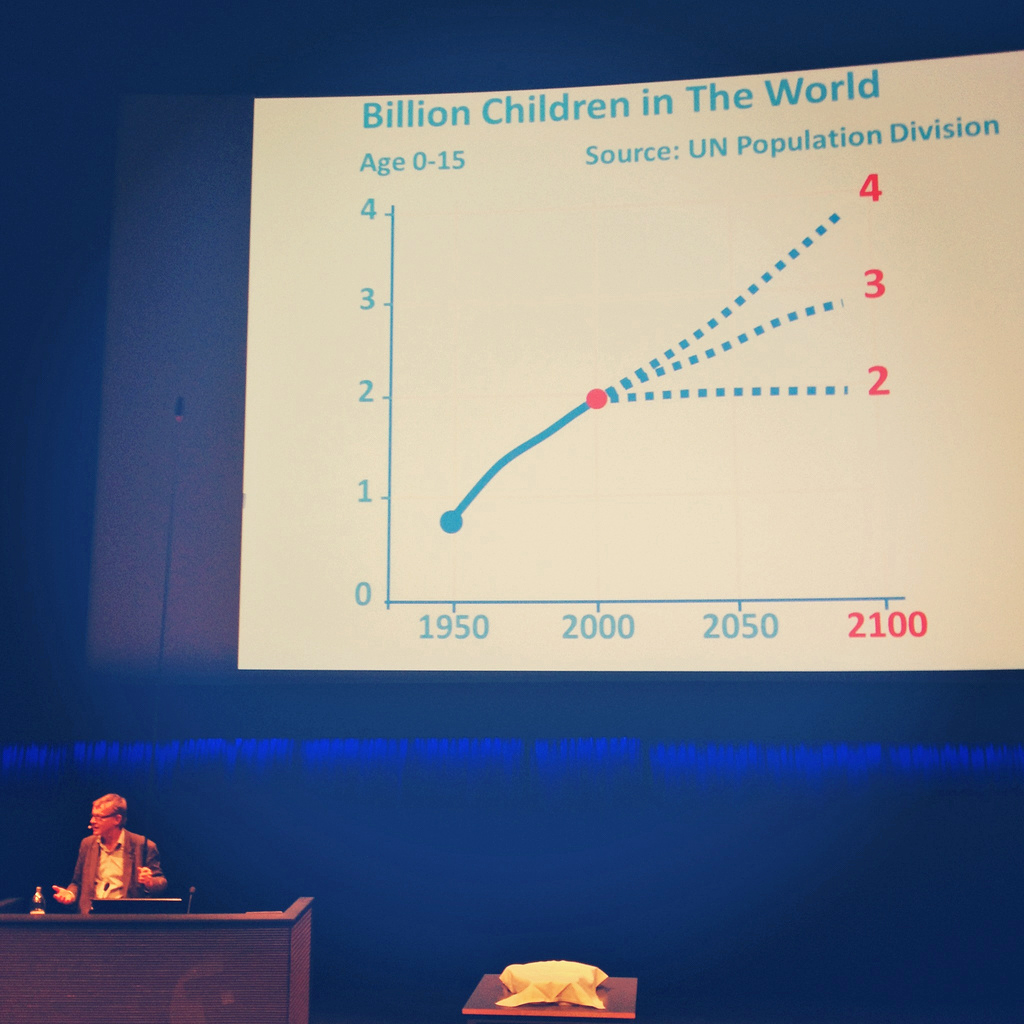
Hans Rosling (1948 to 2017) was a Swedish physician. He gave a TED talk in 2014 with his son Ola on How not to be ignorant about the world. There is another 2007 TED talk titled The best stats you’ve ever seen | Hans Rosling.


There also is a wonderful 2018 book by Hans Rosling, with Ola Rosling, and Anna Rosling Roennlund titled Factfulness: Ten reasons we’re wrong about the world – and why things are better than you think. It has a Wikipedia page too. They discuss ten instincts which can distort our perspective. In March 27, 2025 I blogged about one chapter in a post titled There may be no warning before as disaster.


 There are eleven chapters in the book, ten of which end with as summary as follows:


“Chapter 1 [page 46]: To control the gap instinct, look for the majority.


Beware comparisons of averages. If you could check the spreads you would probably find they overlap. There is probably no gap at all.

Beware comparisons of extremes. In all groups, of countries or people, there are some at the top and some at the bottom. The difference is sometimes extremely unfair. But even then the majority is usually somewhere in between, right where the gap is supposed to be.

The view from up here. Remember, looking down from above distorts the view. Everything else looks equally short, but it’s not.


Chapter 2 [page 74]: To control the negativity instinct, expect bad news.


Better and bad. Practice distinguishing between a level (e.g., bad) and a direction of change (e.g. better). Convince yourself that things can be both better and bad.

Good news is not news. Good news is almost never reported. So news is almost always bad. When you see bad news, ask whether equally positive news would have reached you.

Gradual improvement is not news. When a trend is gradually improving, with periodic dips, you are more likely to notice the dips than the overall improvement.

More news does not equal more suffering. More bad news is sometimes due to better surveillance of suffering, not a worsening world.

Beware rosy pasts. People often glorify their early experiences, and nations often glorify their histories,


Chapter 3 [page 100]: To control the straight line instinct, remember that curves come in different shapes. [See the image shown above].


Don’t assume straight lines. Many trends do not follow straight lines, but are S-bends, slides, humps, or doubling lines. No child ever kept up the rate of growth it achieved in its first six months, and no parents would expect it to.


Chapter 4 [page 123]: To control the fear instinct, calculate the risks.


The scary world: fear vs. reality. The world seems scarier than it is because what you hear about it has been selected – by your own attention filters or by the media – precisely because it is scary.

Risk = danger x exposure. The risk something poses to you depends not on how scared it makes you feel, but on a combination of two things. How dangerous is it? And how much are you exposed to it.

Get calm before you carry on. When you are afraid, you see the world differently. Make as few decisions as possible until the panic has subsided.


Chapter 5 [page 143]: To control the size instinct, get things in proportion.


Compare. Big numbers always look big. Single numbers on their own are misleading and should make you suspicious. Always look for comparisons. Ideally, divide by something.

80/20. Have you been given a long list> Look for the few largest items and deal with those first. They are quite likely more important than all the others put together.

Divide. Amounts and rates can tell very different stories. Rates are more meaningful, especially when comparing between different-sized groups. In particular, look for rates per person when comparing between countries or regions.


Chapter 6 [page 165]: To control the generalization instinct, question your categories.


Look for differences within groups. Especially when the groups are large, look for ways to split them into smaller, more precise categories. And…

Look for similarities across groups. If you find striking similarities between different groups, consider whether your categories are relevant. But also…

Look for differences across groups. Do not assume that what applies for one group (e.g. you and other people living on Level 4 or unconscious soldiers) applies to another (e.g. people not living on Level 4 or sleeping babies.

Beware of ‘the majority.’ The majority just means more than half. Ask whether it means 51 percent, 99 percent, or something in between

Beware of vivid examples. Vivid images are easier to recall but they might be the exception rather than the rule.

Assume people are not idiots. When something looks strange, be curious and humble, and think. In what way is this a smart solution?


Chapter 7 [page 184]: To control the destiny instinct, remember slow change is still change.


Keep track of gradual improvements. A small change every year can translate to a huge change over decades.

Update your knowledge. Some knowledge goes out of date quickly. Technology, countries, societies, cultures, and religions are constantly changing.

Talk to Grandpa. If you want to be reminded of how values have changed, think about your grandparents’ values and how they differ from yours.

Collect examples of cultural change. Challenge the idea that today’s culture must also have been yesterday’s, and will also be tomorrow’s.


Chapter 8 [page 202]: To control the single perspective instinct, get a toolbox, not a hammer.


Test your ideas. Don’t only collect examples that show how excellent your favorite ideas are. Have people who disagree with you test your ideas and find their weaknesses.

Limited expertise. Don’t claim expertise beyond your field: be humble about what you don’t know. Be aware too of the limits of the expertise of others.

Hammers and nails. If you are good with a tool, you may want to use it too often. If you have analyzed a problem in depth, you can end up exaggerating the importance of that problem or of your solution. Remember that no one tool is good for everything. If your favorite idea is a hammer, look for colleagues with screwdrivers, wrenches, and tape measures. Be open to ideas from other fields.

Numbers, but not only numbers. The world cannot be understood without numbers, and it cannot be understood with numbers alone. Love numbers for what they tell you about real lives.

Beware of simple ideas and simple solutions. History is full of visionaries who used simple utopian visions to justify terrible actions. Welcome complexity. Combine ideas. Compromise. Solve problems on a case-by-case basis.  


Chapter 9 [page 222]: To control the blame instinct, resist finding a scapegoat.


Look for causes, not villains. When something goes wrong don’t look for an individual or a group to blame. Accept that bad things can happen without anyone intending them to. Instead spend your energy on understanding the multiple interacting causes, or system, that created the situation.

Look for systems, not heroes. When someone claims to have caused something good, ask whether the outcome might have happened anyway, even if that individual had done nothing. Give the system some credit.


Chapter 10 [page 242]: To control the urgency instinct, take small steps.


Take a breath. When your urgency instinct is triggered, your other instincts kick in and your analysis shuts down. Ask for more time and more information. It’s rarely now or never and it’s rarely either/or.

Insist on the data. If something is urgent and important, it should be measured. Beware of data that is relevant but inaccurate, or accurate but irrelevant. Only relevant and accurate data is useful.

Beware of fortune-tellers. Any prediction about the future is uncertain. Be wary of predictions that fail to acknowledge that. Insist on a full range of scenarios, never just the best or worst case. Ask how often such predictions have been right before.

Be wary of drastic action. Ask what side effects will be. Ask how the idea has been tested. Step-by-step practical improvements, and evaluations of their impact, are less dramatic, but usually more effective.”


The image of a chart on children came from Wikimedia Commons.