Showing posts with label video. Show all posts

Saturday, September 20, 2025

A half-dozen brief YouTube videos from TED-Ed teaching essential communication and presentation skills


There is a blog post from TED-Ed on August 21, 2025 titled Public Speaking 101 launched to teach essential communication and presentation skills. It says they plan a series with eleven YouTube videos. So far they have released the first six, which you can watch in less than 45 minutes:


1]  What happens when you share an idea? [5:29]


2]  How to uncover your best ideas [4:00]


3]  How to communicate clearly [7:11]


4]  What’s the best way to give a presentation? [8:06]


5]  How to speak with meaning [10:23]


6]  5 ways to connect with people [8:08 ]


Here is a transcript of the first one, What happens when you share an idea?:


"Great public speaking is like magic. Whether it’s a presentation for school, a talk for your community, or a video message for family and friends, a good talk can electrify and audience and even change the world.


It all starts with an idea. Ideas change everything. They bring people together, spark curiosity, and inspire action. The right idea can ripple across the planet at the speed of light.


But what is an idea, exactly? Your number one mission as a speaker is to take something that matters deeply to you and rebuild it in the minds of your listeners. That something is an idea. Think of it like a gift you give your audience; something they can walk away with, value, and be changed by.


Your idea doesn’t need to be a scientific discovery or a genius invention to be great. You can share instructions for a special skill you have. Or a story from your life and the lessons it taught you. Or a vision you have for the future. Or just a reminder of the things that matter most.


An idea is anything that can change how people see the world. If you can conjure up an exciting idea in someone’s mind, you have done something wondrous. A little piece of you has become part of them. In March 2015, a scientist named Sophie Scott gave a TED Talk [titled Why we laugh].


‘What I’m going to do now is just play some examples of real human beings laughing. And I want you just to think about the sounds people make and how odd that can be, and in fact how primitive laughter is as a sound. It’s much more like an animal call than it is like speech.


So here we’ve got some laughter for you – the first one is pretty joyful.’ Within minutes, Sophie had the entire audience cracking up. She’s one of the leading researchers on laughter. She was showing the audience just how weird a phenomenon laughter is.


‘Now, this next guy, I need him to breathe. There’s a point in this when I’m like you’ve got to get some air in there, because he just sounds like he’s berathing out. This hasn’t been edited, this is him.’


‘More like an animal call than speech,’ as Sophie put it. Sophie’s talk was a lot of fun to listen to, but she gave her audience something more than just a good time. She changed the way they think about laughter. Sophie’s core idea is that laughter exists as a way human beings form bonds with one another. Her research shows that laughing strengthens relationships.


Nobody who listened to Sophie’s talk will ever hear laughter the same way again. A laugh isn’t just a silly sound in reaction to a joke – it’s a biological process through which we can connect with one another. Sophie gave her audience a gift. She gave them an idea that will be part of them forever.


In order for an audience to receive the gift of an idea, a speaker has to deliver the idea in a way that the audience can understand. How does a speaker do that? Well, it can be helpful to think of a talk as a journey that a speaker and an audience take together. You, the speaker, are the trusty tour guide. To be a good tour guide, a speaker must start where the audience is, and must be careful not to lose anyone by rushing ahead or constantly changing direction. The goal is to lead the audience to a beautiful new place, step by step.


And this is done by using language. Language is a very powerful tool. Let’s prove it. Imagine an elephant with its trunk painted bright red, waving the trunk to and fro in sync with the shuffling steps of a giant orange parrot, dancing on the elephant’s head and shrieking over and over: ‘let’s do the fandango!’ You have just formed in your mind an image of something that has never existed in history, except in the minds of people who have heard that sentence. A single sentence can do that.


The fact that we can transfer ideas in this way is why speaking skills are so important. Language builds our world. Our ideas make us who we are. And speakers who have figured out how to spread their ideas into others’ minds have the power to make an incredible impact. Do you have ideas that deserve a wider audience? Focusing on what gift you would like to give your audience, or what journey you might lead them on, are two great ways to start preparing your talk."  


The cartoon was adapted from this one at Wikimedia Commons.


Friday, June 6, 2025

Simon Sinek describes recovering after losing his train of thought


There is an excellent two-minute video from Simon Sinek at TikTok on March 17, 2025 titled What’s your worst public speaking horror story? It also is at Facebook and Instagram. He says about that potential worst moment that:


“In the speaking world, there is a big conference thrown by an organization called the Meeting Planners Association of America. Basically all the people from all the big companies and events planners that basically book all the speakers. And if you get invited to this conference, it’s a big deal because if you nail it you’re set for life - because all the people who will hire you for the rest of your career are in the room. And if you fail, I mean your career is basically over. It’s going to be rinky-dink little events for the rest of your life.


Anyway, as I was getting going in my career back in the Start with WHY days, I got invited to the Meeting Planners Association of America. I got to speak at it – great honor! I’ve given the speech 1,000 times; I know it inside and out. I’m out there, I’m on the stage speaking. I forgot my train of thought. It’s happened, I’m a pro. I know what to do: go quiet. Find your place, keep going. So I go quiet, not finding my place. Now the panic sets in. I look at my pad, I look at the audience. I don’t know anything that’s going on. I can’t ask the audience, ‘Can you tell me what I was thinking?’ That would be a disaster. My hands are sweaty. My heart is pounding. I don’t know what to do. My life is flashing before my eyes at the end of my career.


So I turn to the audience and I say, ‘Do you ever have that experience where you lose your train of thought and just sheer panic sets in? Your hands get clammy, your heart starts pounding?’ I say, ‘Well, I’m having that right now and let me tell you, I’m so glad it’s happening cause it makes me feel alive.’ And the audience erupted. And then I turned to the audience and say, ‘Can somebody please tell me what I was saying, cause I’ve completely forgotten?’ Somebody shouted out, I picked up and off I went. I got more applause for admitting what I was going through than for the actual speech. So it ended up working out okay.


I want to hear your horror stories as well. I wanna hear the time you were giving a speech at a wedding, a presentation for work, maybe you were standing on a stage as well. Tell me some of the horror stories you’ve experienced and maybe even how you turned them around, or how they didn’t get turned around. And the one thing we think is the most harrowing – I’ll send you a book just to say, ‘Sorry you had to go through that.’ So just put them down in the comments; can’t wait to hear from you.”


The cartoon was adapted from a surprised face at OpenClipArt.


Saturday, May 24, 2025

A hugely overstated claim that 95% of people in the Philippines fear public speaking


There is a one-minute TikTok video from March 19, 2025 by voice artist Richard Abalos with the following claim:


“Afraid of Public Speaking? Here’s the TRUTH. 95% of people fear speaking in front of an audience, but the 5% who can speak? They are likely to become better leaders and communicators in their respective field! Want to speak with confidence, own the stage, and turn every word into POWER? Join Toastmasters! We are a Public Speaking Organization where ordinary speakers become extraordinary leaders. Your voice DESERVES to be heard. Your story CAN change lives. Message us NOW to kickstart your public speaking. journey#PublicSpeaking#Toastmasters#LevelUp@ToastmastersPhillipines @Toastmasters International”


But, as shown above there are results for the Philippines from a 2010 Reader’s Digest Canada article. Just 18% of women and 15% of men feared speaking in public. I blogged about them in a post on April 9, 2012 titled Poll by Reader’s Digest Canada found fear of public speaking wasn’t ranked first in 15 of 16 countries.


Also, on December 1. 2024 I blogged about Does 95% of the population experience public speaking fear?


Wednesday, October 30, 2024

100 Years of Confident Voices: a mostly thoughtful documentary video about Toastmasters International with a brief segment that should have been edited out


There is a 46-minute centennial documentary video about Toastmasters International titled 100 Years of Confident Voices that you can watch here on YouTube. And there is a pdf file with a Discussion Guide. The video has a lot of interesting history:


1938 Inter-Club Speech contest – 11:13


1938 Toastmistress clubs begin – 12:35


1940s first educational manual Basic Training for Toastmasters – 13:27


1950 Advanced manual, Beyond Basic Training – 13:58


1959 Golden Gavel Award - 17:43


1962 moves into its own building - 18:38


1970 Distinguished Toastmaster award begins - 21:54      


1973 Convention, women can join - 24:08


1978 clubs cannot restrict gender - 24:50


1980 74,000 members - 33:09


1981 Accredited Speaker Program - 29:50      


1985 Helen Blanchard first female president - 25:40


1989 New headquarters building in Rancho Santa Margarita - 35:02


2017 Pathways learning experience is entirely online - 38:21 


2018 World Headquarters moves to Englewood Colorado (south of Denver) - 39:40 


From 2010 to 2019 membership goes from 260,000 to 360,000 - 37:21


But back at 6:18 there is a brief segment from the 2019-2020 President, Deepak Menon, that should have been edited out:


“Toastmasters is international and should be international because it benefits all mankind. It’s not just one set of people who should be benefiting from Toastmasters. It is the entire universe that can get the benefits of Toastmasters.”


All mankind and the word International cover the world. The universe is way too overblown – it is beyond both the solar system and the galaxy.


Images of a business world and galaxy were adapted from Openclipart.


Sunday, July 7, 2024

A prop can be as simple as a sheet of paper


There is a one-minute TikTok video from Nicole at TeachingLittleWonderz titled Teaching my students an important lesson using a piece of paper. John Zimmer wrote about it an article a at Manner of Speaking on January 3, 2023 titled The Power of a Prop. She crumples that sheet and says:


“I want you, and it’s going to sound silly, say something mean to this piece of paper. You look ugly. You smell bad. I hate you. You’re the worst one ever. You don’t deserve to be here. Now I want you to apologize. Everybody say sorry. Will this paper ever go back to the way it was when we first started? No. Right? It’s never going to go back to the way it was in the beginning.


And the reason I’m doing this with you today is because this week we’re talking all about how our words and our actions affect other people. Your words affect people so much, even after you leave them, even after you say sorry. They can stay inside that person for a really long time. So, we need to think about how our words and the things that we’re saying to each other are affecting each other. And that’s why it’s important that we use nice, kind words.”     


And back on August 22, 2008 in a post titled Give ‘em props I said that:


“Ellen Hermens describes a speaker who just placed a paper circle on the floor and stood on it to show that ‘this is my point of view’. Then he stepped away and took a critical look at that point of view from another angle.”


You also could fold that sheet of paper to make an airplane or an origami crane, as shown above.


Chapter 37 of the Advanced Public Speaking book by Lynn Meade is titled Props: It is more than just setting stuff on a table. There are 16 embedded videos and 23 references!


Images of a paper airplane and origami crane came from Wikimedia Commons.


Monday, February 19, 2024

A TikTok video on five public speaking myths includes a bogus fear statistic and a bogus Mark Twain quote


If you want to dispel myths, then you shouldn’t state some more. At TikTok on February 13, 2024 there is a two-and-a-half minute teaching video by Trophy Kiprono (a coach from Nairobi, Kenya) titled 5 things they lied to you about public speaking. Her text claims:


“According to the National Institute of Mental Health, it is estimated that close to 73% of the world’s population has a fear of public speaking. Here’s the good news in that statistic. If you have fears around public speaking, you are in good, large company.”


But 73% is baseless nonsense from Statistic Brain, which I discussed on August 14, 2020 in a blog post titled Toastmaster magazine is spreading nonsense from John Bowe about how common the fear of public speaking is.


Her video mostly contains reasonable advice. A transcript with punctuation and capitalization added is:


“Let’s talk about some common public speaking myths that we need to dispel now. Because of the fear that surrounds public speaking there’s a lot of myths surrounding it.


The first myth is that great speakers are born that way. It’s a myth that great speakers are born with the ability to connect confidently and easily with a room full of people. The truth is anyone who aspires and desires and decides to improve their public speaking skills can do so. It’s a learnable skill, it’s like riding a bicycle which can be achieved through training, commitment, determination, and most importantly practicing.  


The second myth surrounding public speaking is that experienced speakers don’t feel nervous. As you develop your public speaking skills, your pre-presentation anxiety lessens. The truth is your nerves will never go away completely, if you’re about to give a presentation you genuinely care about. Experienced speakers simply learn how to control, manage, and even harness their nerves to help them rather than hinder them. As Mark Twain once said, ‘There are two types of speakers – those that are nervous and those that are liars.’       


The third common myth out there is that only extroverts make good public speakers. No, that’s not a fact. Your personality doesn’t matter. It doesn’t matter if you’re an introvert, an extrovert, an ambivert, or any other type out there. All you need is something important to say that will make a difference to others. A belief that what you have to say needs to be heard. A passion for what you believe in, and finally a conviction to express your passion and share your message.


The fourth myth out there is that you have to be perfect. Anxiety increases substantially when you strive for perfection. The greatest presenters know that, so they don’t try to go for an Oscar winning performance. Instead they know that their job is simply to be the best of who they are, with the sole intention of making a difference to their audience rather than making themselves look like ‘superstars.’


The [fifth] final myth is that you need to memorize your speech. Your audience don’t want to hear a sleek polished presenter who has memorized everything. It’s a myth that’s ‘theatre.’ Your audience want to hear someone speak, someone who knows what they’re talking about, someone who cares about what they’re saying, someone who makes their audience care too. You don’t need to memorize your speech. This will do both you and your audience more harm than good.


I hope these tips help.”


But under the second myth she includes a bogus Mark Twin quote. On May 12, 2020 I blogged about Did Mark Twain really say there were just nervous speakers or liars?


The image was adapted from this one at Openclipart.


Sunday, February 20, 2022

A satirical one-minute video from The Onion with terrible advice on how to conquer a fear of public speaking


The Onion is a satirical phony newspaper. Back on February 27, 2017 they published a one-minute video with awful advice on How to Conquer a Fear of Public Speaking. The text (which you should ignore) says to:


“Fill the crowd with a few familiar faces who will lie to you about how it went. 


Never start a speech without tossing a few fun-size candy bars into the audience first to get them on your side.


Close your eyes and breathe deeply before each word during your speech.


Try to imagine everyone in the audience dead.


Take solace in knowing that no matter how your speech goes, it will be forgotten immediately upon its conclusion.”


Sunday, June 27, 2021

Another Dilbert cartoon about Zoom backgrounds


On June 21, 2021 I blogged about a Dilbert Cartoon about Zoom Backgrounds. The next day, June 22, he had another cartoon titled Zoom Background Say A Lot with the following dialogue:


Dogbert: Your video call background needs improvement. I’ll fill your shelves with sports trophies, plus photos of you shaking hands with Jesus.

Dilbert: Who would believe I shook hands with Jesus?

Dogbert: The same people who believe you won lots of sports trophies.


The image of trophies was cropped from this image by Slayym at Wikimedia Commons.


Monday, June 21, 2021

Dilbert cartoon about Zoom backgrounds


Today’s Dilbert cartoon is titled Zoom Background Designer. The dialogue is as follows:

Dogbert: The background of your video calls says a lot about you. For example, it’s obvious you have no woman in your life, and your knickknacks suggest you are a latent serial killer.

Wally: Spookily accurate.

Dogbert: Exactly. That’s what we don’t want.


On March 20, 2016 I blogged about why you Don’t dress like a ninja when you are going to speak! A poorly chosen black or white background also can be awful, if your clothing matches it.

On May 8, 2021 I blogged about Creating wallpapers for Zoom virtual backgrounds.


The image of Vejigante masks on display in San Juan was adapted from one by the Eloquent Peasant at Wikimedia Commons.


Sunday, February 7, 2021

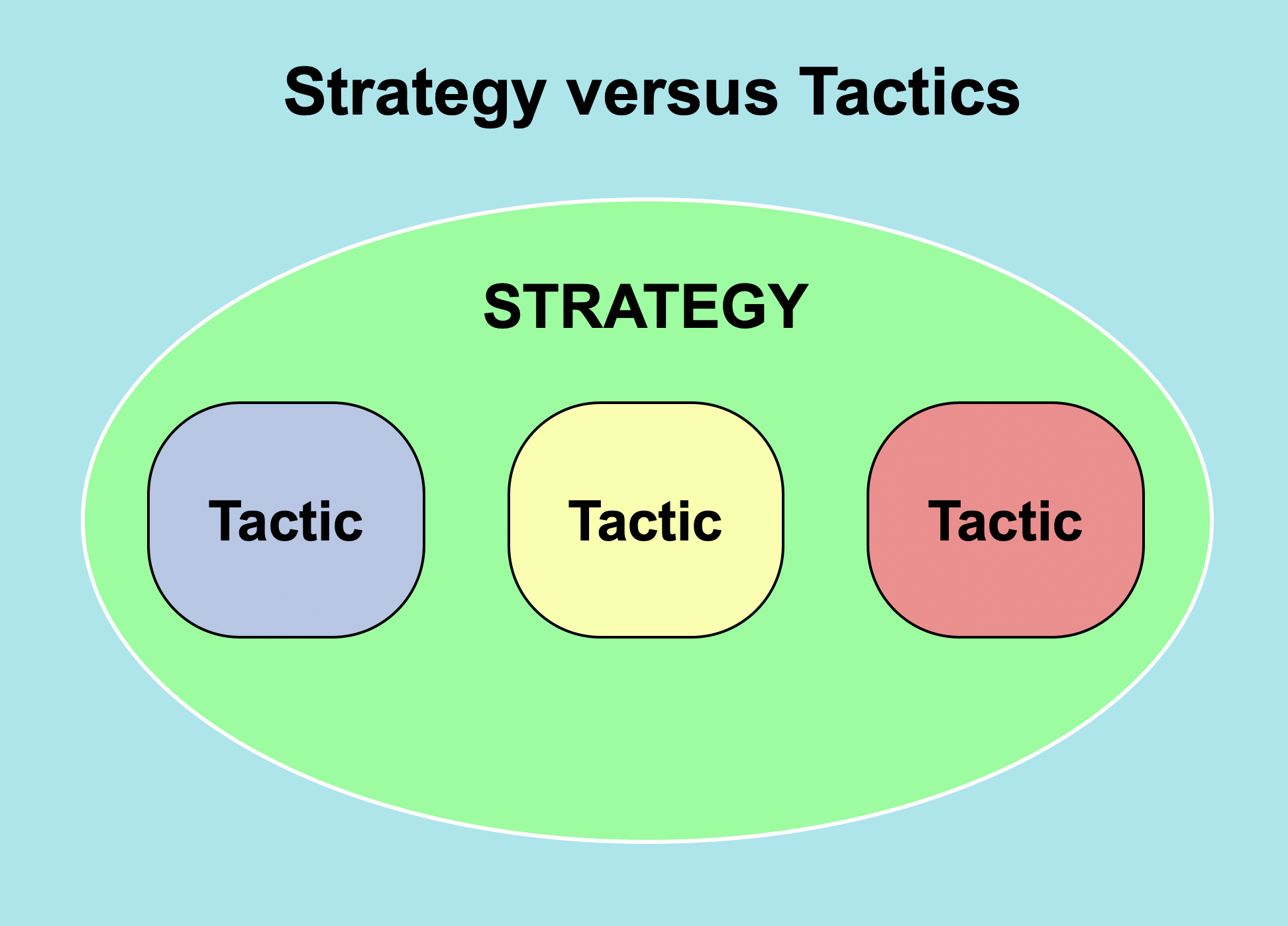
Better Zoom meetings: the big picture (strategy)


In this pandemic year it seems everybody and his brother now is a Zoom ‘expert.’ Much advice just is tactics (specific tips), like an article by Mike Koenigs at Entrepreneur on April 24, 2020 titled 25 Ways to make your Zoom meetings awesome. Every now and then we glimpse the bigger picture and get strategies, like in another article by Mike Koenigs at Forbes Coaches Council on May 6, 2020 titled Avoid the Top Five mistakes people make in Zoom meetings, which advised they were:


Ignoring or failing to leverage technology

Failing to connect with your audience

Failing to represent your brand

Failing to optimize for modern attention spans

Failing to observe online etiquette


But there are some real, capital E – Experts who have analyzed online meetings. One is Nick Morgan, who in 2018 wrote a 288-page book titled Can You Hear Me? How to connect with people in a virtual world. A third article by Nick Morgan at his Public Words blog on October 28, 2020 discusses Three ways to make video conferencing more bearable, which I describe as follows:


The Rule of Predictability


Provide an agenda (link to it as the very first item in the chat) and have a Master of Ceremonies.


The Rule of Transparency


Begin by checking for local issues. People may be too polite to bring them up. Take a break in the middle of the meeting for some casual chat.


The Rule of Visibility   


Create a formal mechanism, like a hand raise, for passing the conversation to the next participant. At an in-person meeting you can see who is standing behind the lectern. 


The person who finishes speaking on Zoom could acknowledge being done with the TADA reaction.


A fourth article by Nick Morgan at his Public Words blog on November 24, 2020 titled Making video conferences work for you describes five more specific things to do:


Don’t hang back

Do give back

Don’t hold back

Do feed back

Don’t sit back

Ignore that advice and you may find that Zoom meetings are just modern seances.

Cartoons of speakers were adapted from those at Wikimedia Commons.  


Thursday, February 4, 2021

Better Zoom meetings: mute, video and chat problems


The Zoom virtual meetings software has controls for turning audio and video on or off, and a chat feature. All of these can be misused, as is discussed by Janani Sekar in an article at  Harvard Crimson on September 24, 2020 titled How to: Deal with Zoom disasters.


Speaking while you’re muted (but didn’t mean to be)


This is minor. You just unmute, say oops, and then say what you wanted to convey. “You’re still on mute” is a common cry at the online Toastmasters club meetings I attend. 


Speaking while you’re not muted (but meant to be)


This can be a major ‘hot mic’ downfall moment. There is an article at Snopes titled Did Uncle Don call kids ‘little b#st#rds’ on the air? describing a debunked urban legend about a radio host. Later something similar showed up in the 1957 movie A Face in the Crowd.


Video off when it should have been on


This is minor, and easily fixed.


Video on when it should have been off


This either could be minor or major. You can gross people out by picking your nose, using your camera as a makeup mirror, or full frontal nudity.


Video filter cat-astrophes (Updated February 9)


An article by Aaron Feis in the New York Post on February 9, 2021describes how a Zoom filter transforms lawyer into cat during court hearing.


Zoom chat


An article by Sarah Gershman at the Harvard Business Review on November 4, 2020 titled Yes, virtual presenting is weird explains how:


“The chat function is a great way to get immediate audience response. You could begin with a relevant question and ask people to type the answer in the chat. For example, you might ask everyone to write one thing they hope to learn from the presentation. The chat is especially helpful to introverts who may not want to speak up. Make sure to read aloud at least some of the answers (and use first names if you can). When you engage the audience immediately, you feel as though people are listening, which raises your confidence for the rest of the presentation.”


Zoom chat (with the wrong private person)


This might be minor. Just one person thinks you are creepy. But that person might also be creepy as in this 20-second video clip from Taxi Driver (with very bad language).


Zoom chat (with everyone instead of a private person)


This can be major, depending on what you inadvertently said.


Images of a cartoon monkey, microphone and webcam came from Wikimedia Commons. Cartoons of men with upset and horrified faces both came from the 1912 book The Cartoonist’s Art by J. Campbell Cory at the Internet Archive.


Tuesday, February 2, 2021

Better audio at Zoom meetings: microphones and speakers


Audio is an important part of a Zoom meeting. I am a member of two Toastmasters clubs, so I have gradually learned how to use Zoom. A voice goes through a microphone, computer, Zoom software, and a speaker before you hear it. Anthony English has a seven-minute YouTube  video titled Zoom Audio Test (step by step tutorial). 


Desktop computers typically used modest speakers like the 3” wide ones shown above. But laptops have even smaller, tinnier speakers that only provide half-decent quality. Consider using external speakers.


A laptop computer typically has a tiny electret microphone located above the top of the screen, next to the webcam. When you move back from the camera, you also move away from the microphone and then may not be heard clearly.


This problem can be solved by instead using a lavalier (lapel) microphone clipped to your shirt, as is shown above.


Or you can get a headset with a noise-cancelling microphone and headphones. For $30 I got a Logitech H390 USB headset (shown above). It has an eight foot cord, which gives me room to move around. There also are wireless headsets.     


Anyhow, what is a lavalier? I’d heard of musketeers and grenadiers, so a lavalier might be a fierce Hawaiian warrior who throws balls of lava. But lavalier really is a jewelry term for something hung around the neck. It is named for the mistress of the French King Louis XIV – Louise de la Vallière.


An image of John Kasich wearing a lavalier microphone, and icons for microphone and speaker all came from Wikimedia Commons.