skip to main |
skip to sidebar

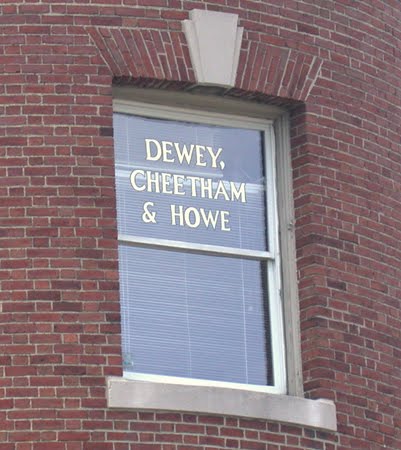
Many entrepreneurs have started by making their last name part of their business name. For some that may have been a bad idea, like the infamous law firm of Dewey, Cheetham and Howe mentioned on the Car Talk radio show.
Shel Silverstein’s novelty song “A Boy Named Sue” was a country hit record for Johnny Cash. The first verse says:
“Well my daddy left home when I was three
And he didn't leave much to ma and me
Just this old guitar and an empty bottle of booze.
Now, I don't blame him cause he run and hid
But the meanest thing that he ever did
Was before he left, he went and named me ‘Sue.’ "
I found three examples of bad sounding firm names for speakers located in the Dallas – Forth Worth area.
Back in 1980 Dianna Booher, CSP, CPAE named her business communication and productivity firm Booher Consultants. Thirty years, 44 books, and many articles later you still have to wonder about continuing to use a name pronounceable as “boo her.”
Randy Schwantz is a sales trainer in the commercial insurance industry. Currently his firm is known as The Wedge Group, but once it was called Schwantz and Associates. Schwantz is a Yiddish euphemism for penis.
Linda Swindling, JD, CSP currently runs a speaking, training and consulting company called Journey On. She once worked for a law firm with the usual practice of listing last names of their lawyers: Withrow, Fiscus and Swindling.
There is an even worse Midwestern example. Tom Raper has a recreation vehicle business located off I-70 in Richmond, Indiana, which is right between Columbus, Ohio and Indianapolis, Indiana. Mr. Raper called his company Raper RVs. It has a phone number of (800) RAPERRV, and a web address of www.tomraper.com.
December 30, 2010 Update:
When I looked up the raper as a last name on Google, I found it was an Old English spelling for describing a roper (a person who makes rope). How did Tom's ancestor get through immigration without getting told to change it?

 Toastmasters meetings incorporate an impromptu speaking portion called Table Topics. Very recently Andrew Williams even created a whole web site about it, called Table-Topics Tips.
College and high school debaters have competed in longer impromptu speaking and extemporaneous speaking events, and there is a literature about how to do it. For example, San Diego State University has a pair of web pages written by Andrew Wood on Thesis Development in Impromptu Speaking and Argument Construction in Impromptu Speaking.
If you ask most US residents what the acronym NFL stands for, they will reply it’s the National Football League. High school debaters will instead tell you that in the other NFL the F is for Forensic. The National Forensic League publishes a magazine called The Rostrum. Page 35 of the March 2010 issue has a five page article by Robert Carroll about Organizing an Impromptu Speech Using Unified, Dialectic, and Critical Analysis. You can find more Rostrum articles about impromptu and extemporaneous speaking here.

I just saw an excellent, very simple way to keep track of where you are going during an impromptu speech, like Table Topics at a Toastmasters meeting. It was described by Lori Gracey and Megan Moe-Lunger in an article on The Handi-Speech: Teaching Inmpromptu Speaking which they presented at the 2009 annual convention of the National Communications Association.
Here’s how to do it. First, close your left hand to seize the topic.
Now open your fingers, one by one to reveal:
1. The introduction (your thumb)
2. Your first point (index finger),
3. Your second point (middle finger),
4. Your third point (ring finger),
5. The conclusion (your pinkie)
Very handy!
 College newspapers have a fresh attitude compared with the daily fish wrapper produced by “professionals” that lands on your doormat each morning. What’s wonderful about them is that, just like academic politics, the stakes are so low.
Sometimes there is sophmoric humor, like Public Speaking: How to Fake Your Own Death. In the Rocky Mountain Collegian on September 8th Jonathan Kastner gave some tongue in cheek advice including:
"....Keep in mind that it’s mostly about how you look, not what you say.
....Wrap yourself in aluminum foil to really make your arguments shine.
....Eat right before you go onstage in case you get hungry during the speech.
....A nice cold soda will keep you calm and focused."
Other times there is an serious approach, complete with a scary statistic. In the Ball State Daily News on September 1st there was a feature article by Meira Bienstock about how Fear of Public Speaking is Going Down but the Anxiety Remains. She claimed there was a Gallup poll which revealed that:
“While still high, the fear of public speaking has gone down by 5 percent in the past 10 years.”
I can’t find one which says that. There is a 2001 Gallup poll which shows a 5% decrease to 40% from the 45% found in their 1998 poll. But, that is not 10 years and the data are old news compared with the survey of college student fears I discussed in a post on August 1st. It looks to me like Meira didn’t bother to check the information she got from an instructor, Gayle Houser.
 You probably have seen a pie chart like the one above accompanying an explanation that research (or science) has shown what a large percent of your message is conveyed by body language (55%), rather than by tone of voice (38%) or mere words (7%). Last month Max Atkinson blogged about how:
“....If true, for example, it would mean that anyone who is unable to see a speaker’s facial expressions, whether because they are blind, in the dark, listening to a radio or talking to someone on the telephone, would only be able to understand 45% of what was said to them.”
Since less than half the message was conveyed, both those inventions (and the phonograph) would have failed miserably. Consider this alternate Bizarro history: 1. Alexander Graham Bell found that no one was interested in using his 1876 telephone. He went back to working on speech and hearing, and died in obscurity. Live personal communication finally became popular a century later with the fiber optic networks and Picturephones.
 2. Thomas Alva Edison had hoped that his 1877 phonograph would be used both for dictating correspondence and recording famous speeches. Instead it only found a pathetically tiny niche market as a novelty for amusing dogs. Later Edison lamented that the phonograph was the dumbest idea he’d had since his first patent for a vote recorder.
 3. In 1920 commercial radio broadcasting also failed. The publicity photo of a girl listening to a story remained just a dream. Radio only found a minuscule market for delivering instrumental music at funeral parlors. Network broadcasting had to wait another quarter century for television to be perfected.
That improper generalization of how oral communication works has already been debunked in magazine articles, in Wikipedia, and in a hilarious video.

Today Seth Godin blogged about the Myth of Preparation. He had a prettier graphic than the one shown above. On mine I have labeled three stages of preparation for a craft of trade: apprentice, journeyman, and master. They will result in quality that might be terrible, mediocre, or great. That is not what Seth calls the three stages though. He instead says:
"There are three stages of preparation. (For a speech, a product, an interview, a sporting event...)
The first I'll call the beginner stage. This is where you make huge progress as a result of incremental effort.
The second is the novice stage. This is the stage in which incremental effort leads to not so much visible increase in quality.
And the third is the expert stage. Here's where races are won, conversations are started and sales are made. A huge amount of effort, off limits to most people, earns you just a tiny bit of quality. But it's enough to get through the Dip and be seen as the obvious winner."
When I read his words I was puzzled. Why didn’t he take a minute to check a dictionary and find out that novice is a synonym for beginner? His word use today was not expert at all!